Can I Sue My Landlord for Black Mold in California?
This post is general information only, not legal advice. Whether you can sue a landlord for black mold in California depends on the facts of your situation, the law that applies, and the evidence you have, and only a lawyer licensed in California can advise you on your own case. What this post can do is explain the California law that tenants most often rely on, what documentation matters, and what steps usually come before any legal action.
Mold Removal Experts LA is a referral service that connects customers with independent local providers; it does not perform mold work itself. The tenant-rights guide linked below gives more general information on the same law, and it is also general information, not legal advice.
What California law says about mold and habitability
California law treats visible mold that endangers health as a substandard building condition under Health and Safety Code section 17920.3. That section lists conditions that make a building substandard, and visible mold growth that endangers the health of occupants is among them. A second law, Civil Code section 1941.1, sets out the implied warranty of habitability: a landlord must maintain a rental in a habitable condition, which includes keeping the building waterproof and weatherproof, keeping plumbing and gas facilities in good working order, and maintaining the premises in a condition fit for human occupation. A leak that lets water in, and mold that follows it, can be a habitability problem under that section.
A third law, Senate Bill 655, which took effect in 2016, added mold to the list of substandard conditions in the Health and Safety Code, and it gave local enforcement agencies, such as a city or county health or housing department, authority to act on mold complaints. That means a tenant's complaint can go to a local agency as well as to the landlord. The exact text of these statutes should be checked at the California Legislative Information site before relying on them, because statutes change, and because this post is a summary, not a legal text. The tenant-rights guide on this site covers the same statutes in more detail, and it is also general information, not legal advice.
What a tenant usually needs to show
In general, a tenant who brings a habitability claim needs to show that the mold problem exists, that the landlord knew or should have known about it, that the landlord was given a reasonable chance to fix it, and that the problem was not caused by the tenant. That is a general description, not a legal test, and the details depend on the facts and on the court or agency involved. The most useful evidence is usually written: a dated notice to the landlord describing the mold, where it is, and when it appeared; photographs of the mold and of any leak or staining; any inspection report, moisture readings, or laboratory results; and a record of what the landlord did or did not do after being told.
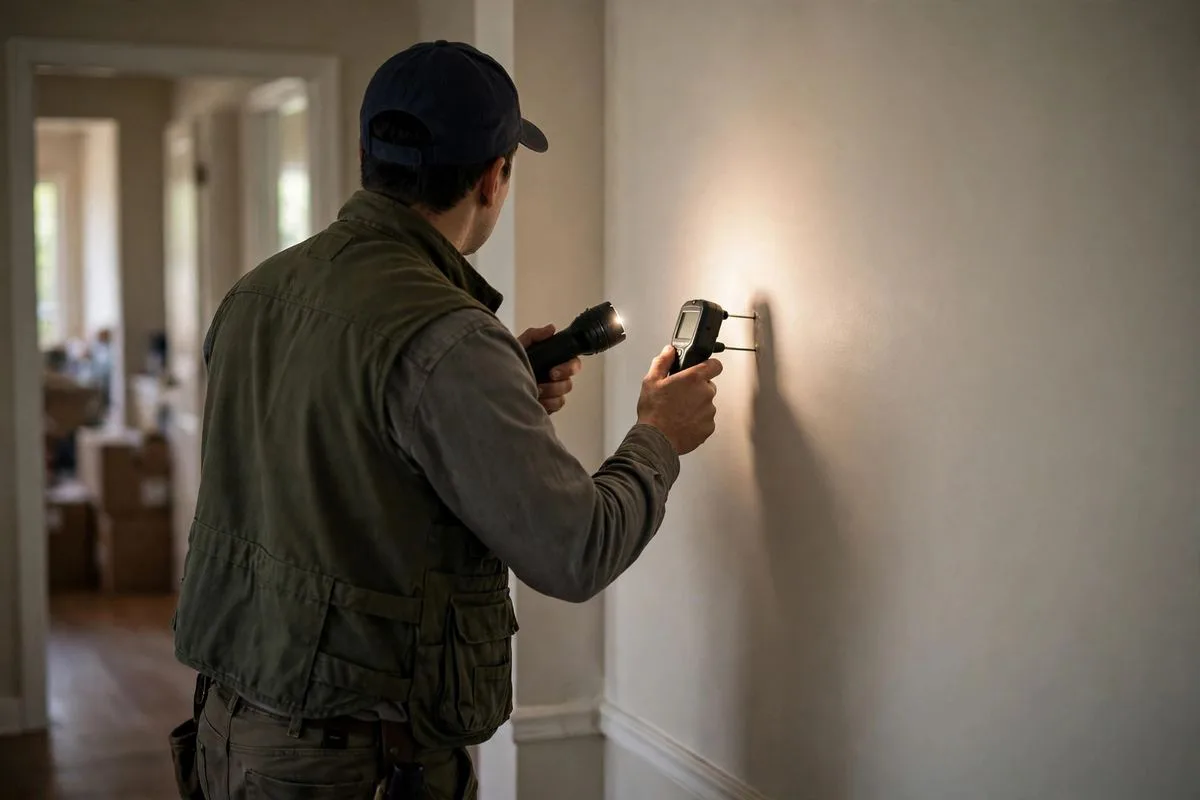
An independent mold inspection can be useful evidence, because it documents the moisture source, the extent of the problem, and the recommended work, in a form that can be used in a dispute. A provider connected through this site can inspect a rental, map the moisture, and recommend testing where the results will change a decision. That inspection is an environmental assessment, not a legal opinion, and it does not by itself prove a legal claim. A lawyer can advise whether the evidence supports a claim, and what kind of claim it supports.
Steps that usually come before any legal action
The first step is usually to tell the landlord promptly and in writing, describing where the mold is, when it appeared, and whether there is a leak. Keep a copy of the notice, and note the date it was sent and how it was sent. If the landlord does not respond, a second written notice, with a deadline, is a common next step. If the problem is not fixed, a tenant can complain to the local housing or health department, such as the Los Angeles Housing Department, which can inspect the property and order repairs. That agency route is often faster than a court case, and it does not require a lawyer.
Other steps depend on the situation. Some tenants withhold rent, repair and deduct, or move out, but each of those steps has legal risks, and none of them should be taken without legal advice. California law has specific rules about when rent can be withheld and when a tenant can repair and deduct, and getting those rules wrong can create a new problem. A tenant who is considering any of those steps should talk to a lawyer, a legal aid organisation, or a tenant rights clinic before acting. This post does not recommend any of those steps, and it does not advise on them.
What kinds of legal action exist, in general terms
In general terms, a tenant who believes a landlord has failed to maintain a habitable home can bring a claim in court, complain to a local enforcement agency, or, in some cases, seek help from a legal aid organisation. The kind of claim, the court, and the amount that can be recovered depend on the facts, the law, and the evidence, and they vary from case to case. Some claims are brought in small claims court, where the amount is limited and lawyers are usually not involved, while others are brought in a higher court with a lawyer. This post does not say which kind of claim fits any particular situation, and it does not predict an outcome.
A lawyer licensed in California can advise on whether a claim exists, what evidence is needed, what the time limits are, and what the costs and risks are. Many legal aid organisations and tenant rights clinics offer free or low-cost advice to tenants, and a tenant who cannot afford a lawyer should look for those services before deciding what to do. The time limits for bringing a claim, known as statutes of limitation, vary by claim type, and waiting too long can affect whether a claim can be brought at all. That is another reason to seek legal advice promptly rather than waiting.
Documentation that helps, whatever you decide
Whatever a tenant decides, documentation helps. Keep a dated record of when the mold was first noticed, where it is, and how it has changed. Photograph the mold, any leak, any staining, and any damage, with a date on each photograph if possible. Keep copies of every notice to the landlord, every reply, and every repair request, with dates. Keep any inspection report, moisture readings, laboratory results, and any receipts for expenses, such as a hotel stay or a doctor's visit, if those are relevant. If a local agency inspects the property, keep a copy of its report or order.
That documentation is useful whether the next step is a complaint to a housing department, a conversation with a lawyer, or a court case. It is also useful for the landlord, because it shows what was reported and when, and what was done about it. A tenant should not disturb the mold to collect a sample, and should not try to test it with a home kit, because that can spread spores and because a home kit cannot reliably identify a species. An independent inspection, with a written report, is the reliable way to document the problem.
What a landlord mold provider can and cannot do
A mold provider connected through this site can inspect a rental, map the moisture, recommend testing, and, where needed, remediate the mold. That work can be done for a tenant, for a landlord, or for a property manager, and the landlord mold removal page explains what that service covers. A provider cannot give legal advice, cannot decide whether a landlord has broken the law, and cannot represent a tenant in a dispute. Those are jobs for a lawyer, a legal aid organisation, or a tenant rights clinic. A provider's inspection report is evidence, not a legal opinion, and it should be used as part of a conversation with a lawyer or an agency, not as a substitute for one.
Published:
Related pages
Frequently asked questions
How long do I have to bring a claim against my landlord?
Time limits, known as statutes of limitation, vary by claim type in California, and waiting too long can affect whether a claim can be brought at all. This post does not give a specific time limit, because it depends on the claim. A tenant who is considering legal action should talk to a lawyer or a legal aid organisation promptly.
Can I withhold rent until my landlord fixes mold?
California law has specific rules about when rent can be withheld and when a tenant can repair and deduct, and getting those rules wrong can create a new problem. This post does not recommend withholding rent or any other step, and a tenant who is considering it should get legal advice from a lawyer, a legal aid organisation or a tenant rights clinic first.
Where do I complain about mold in Los Angeles?
A tenant can complain to the Los Angeles Housing Department, which can inspect the property and order repairs, as well as to the landlord in writing. That agency route is often faster than a court case and does not require a lawyer. Keep a copy of the complaint and of any agency report or order.
Does an inspection report help if I talk to a lawyer?
Yes, it can. An independent inspection report documents the moisture source, the extent of the problem and the recommended work, in a form that can be used in a dispute. It is evidence, not a legal opinion, and a lawyer can advise whether it supports a claim and what other evidence is needed.
Need mold help in Los Angeles?
Tell us where the mold is and how large the area looks. We will connect you with an independent local provider.
Request a referral Call (945) 422-7665
Mold Removal Experts LA is a referral service. We do not perform mold inspection, testing, or remediation. We connect you with independent local providers who do the work.