Mold Prevention in Los Angeles
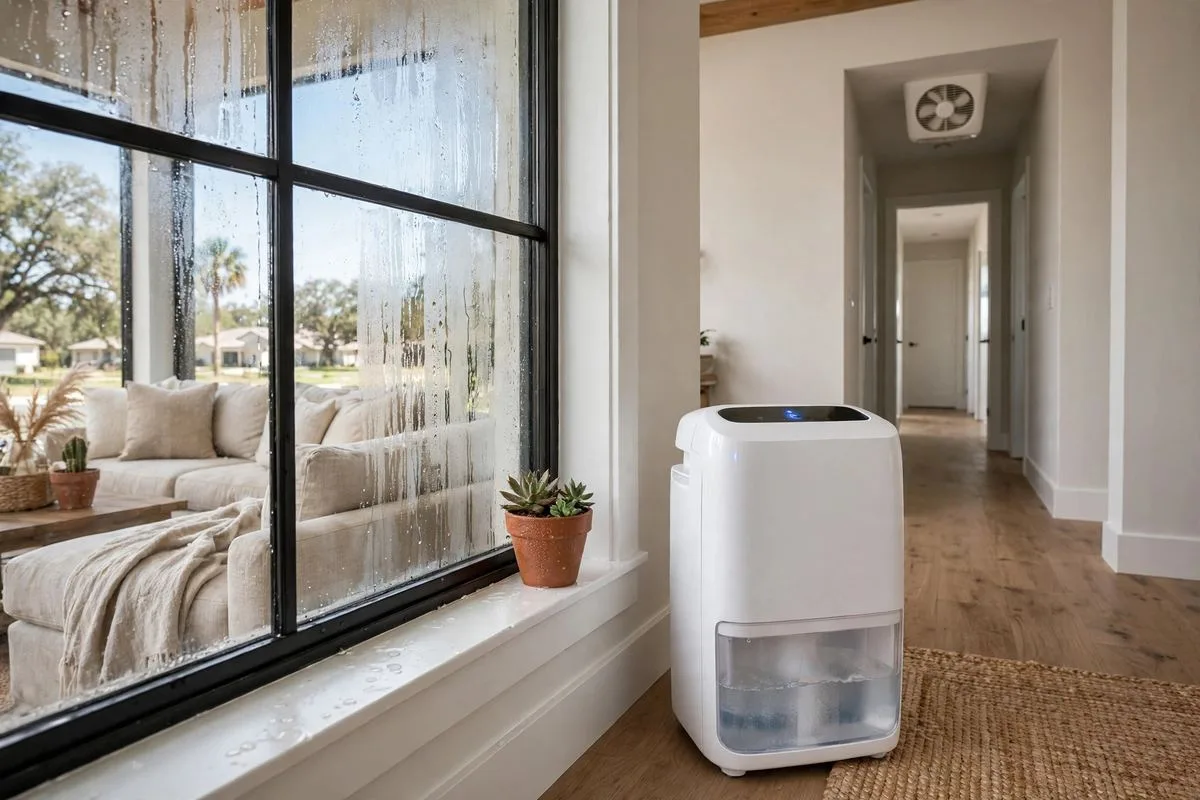
Mold prevention in Los Angeles is moisture control. Mold needs damp material to grow, and a home that stays dry does not grow mold. Prevention is therefore not a product or a treatment. It is a set of habits and building measures: fixing leaks promptly, ventilating bathrooms and kitchens, keeping indoor humidity under control, and acting in the first day or two after water damage, before mold has a chance to take hold. Mold Removal Experts LA does not perform prevention work itself. This site connects you with independent local providers, and a provider can advise on the measures that fit your home.
Prevention is also the cheapest mold work there is. A leak fixed the week it starts costs less than the remediation job it becomes six months later. A bathroom fan that works costs less than the drywall it protects. The first steps after water damage cost nothing but attention, and they decide whether the next step is a drying job or a remediation job. This page covers the practical steps, in the order they matter.
The first 24 to 48 hours after water damage
Mold can begin growing within 24 to 48 hours on damp materials, and the first day or two after water damage are the most important. Stop the water source if you can do so safely. Remove standing water with a wet vacuum, mops or towels. Move furniture, rugs and valuables out of the wet area. Get air moving through the affected area with fans and open windows, if the weather allows. If the water is sewage, keep everyone out of the affected area and do not attempt to clean it yourself.
Those steps are the difference between a drying job and a remediation job. Materials that are dried within the first day or two often survive. Materials that stay wet for days usually have to be removed. Take photos of the damage before anything is moved, and note when the water started and what caused it. Then request help, and describe the event clearly. The water-damage mold cleanup page explains the provider's part of the process in more detail.
- Stop the water source safely
- Remove standing water
- Move furniture and valuables out
- Get air moving with fans and open windows
- Take photos and note when the water started
Moisture control inside the home
Indoor humidity is the background condition that decides whether mold can grow. The EPA advises keeping indoor humidity below 60 percent, and ideally between 30 and 50 percent. In Los Angeles, indoor humidity is usually manageable with ventilation and, where needed, a dehumidifier. The rooms that need attention are the ones that produce moisture: bathrooms, kitchens and laundry rooms, and the rooms that trap it: closets against exterior walls, rooms with poor air movement, and basements or crawl spaces where they exist.
A hygrometer, a small device that measures indoor humidity, is a cheap way to know where your home stands. If the reading in a room is consistently above 60 percent, that room needs more ventilation or a dehumidifier. If a room smells musty, that is a sign to look for the moisture source, not only to air the room out. The moisture control page covers the measures in more detail.
- Keep indoor humidity below 60 percent, ideally 30 to 50 percent
- Ventilate bathrooms, kitchens and laundry rooms
- Watch closets against exterior walls and rooms with poor air movement
- A hygrometer shows the humidity in each room
- A musty smell is a sign to look for the moisture source
Ventilation that actually works
Ventilation is the most effective and the most neglected prevention measure in Los Angeles homes. A bathroom exhaust fan that works, and is used during every shower and for a period afterwards, removes the warm moist air before it condenses on walls and ceilings. A kitchen range hood that vents outside does the same for cooking moisture. Whole-home ventilation, through windows and through the HVAC system, keeps the air moving so no room stays damp for long.
Many older Los Angeles homes have fans that are undersized, noisy and therefore never switched on, clogged with dust, or venting into the attic instead of outside. A provider who inspects a home checks the fans and the ventilation openings, and can advise on what needs to be fixed. After any remediation job, the ventilation fix is part of the prevention that keeps the mold from returning.
- Run the bathroom fan during every shower and afterwards
- Use a kitchen range hood that vents outside
- Keep fans clean and replace fans that are undersized or noisy
- Make sure fans vent outside, not into the attic
- Ventilate the whole home so no room stays damp
Fixing leaks promptly
A slow leak is the most common cause of mold in Los Angeles homes, and the most preventable. A supply line, a drain, a toilet seal, a roof flashing or a water heater that seeps for weeks or months wets the inside of a wall or a floor long before a stain appears. The habit that prevents it is simple: look for the signs regularly, and act on them quickly. A water bill that rises without explanation, a stain that grows after rain, a soft spot in drywall, a musty smell that appears when the air conditioning runs, or a floor that feels spongy are all signs to investigate.
The fix does not have to be expensive to be effective. A leaking supply line, a failed toilet seal or a cracked grout line fixed the week it is found is a small job. The same leak left for six months is a remediation job. The habit is the prevention: check under sinks, around toilets and water heaters, and in the attic after winter rain, and fix what you find promptly.
- Check under sinks, around toilets and water heaters regularly
- Watch for rising water bills, stains, soft drywall and musty smells
- Check the attic after winter rain
- Fix a leak the week it is found, not six months later
- A small repair now prevents a remediation job later
Preventing mold in attics and crawl spaces
Attics and crawl spaces are the parts of a home most often forgotten, and they are the parts where mold grows unnoticed for longest. In the attic, prevention is a roof that is maintained, vents that are clear, and exhaust fans that terminate outside the attic. Check the attic after winter rain for new staining on the sheathing or damp insulation. In the crawl space, prevention is a vapor barrier over the ground, ventilation openings that are clear, drainage that sends water away from the house, and plumbing above that does not leak.
Both spaces benefit from a periodic look. A homeowner who enters the attic once a year and the crawl space once a year, or who asks a provider to look during a routine visit, catches the problem while it is still small. The attic mold and crawl space mold pages explain the causes and the treatment for each space in more detail.
- Attic: maintained roof, clear vents, fans venting outside
- Crawl space: vapor barrier, clear ventilation, drainage away from the house
- Check both spaces after winter rain
- A periodic look catches the problem while it is small
When prevention needs a provider
Most prevention is habit and maintenance, and a homeowner can do it. A provider is needed when the problem is beyond habit: a leak inside a wall that cannot be found, a ventilation system that needs to be redesigned, a crawl space that needs a vapor barrier and drainage work, or a home that has had mold before and needs a professional assessment of why it returned. A provider can also advise on dehumidification for a home or a room that stays damp despite ventilation.
Requesting prevention help is the same process as requesting any other service on this site: describe the problem through the request form or by calling, and an independent local provider will contact you to discuss it. The provider advises on the measures that fit your home, and discusses the scope and pricing directly with you.
- A leak inside a wall that cannot be found
- Ventilation that needs to be redesigned
- A crawl space needing a vapor barrier and drainage work
- A home that has had mold before and needs an assessment
- Dehumidification for a room that stays damp
Related pages
How a referral works
- Tell us about the mold. Where it is, how large the area looks, and whether there has been a leak or flood.
- We connect you with independent local providers. They do the inspection, testing, removal or remediation — we do not perform the work ourselves.
- The provider contacts you. They arrange the visit, explain what they found, and agree the work with you directly.
Frequently asked questions
How can I prevent mold in my home?
Control moisture. Fix leaks promptly, ventilate bathrooms and kitchens, keep indoor humidity below 60 percent, and act in the first day or two after water damage. A home that stays dry does not grow mold, and prevention is a set of habits and building measures, not a product.
What should I do in the first 24 to 48 hours after water damage?
Stop the water safely, remove standing water, move furniture and valuables out of the wet area, and get air moving with fans and open windows. Mold can begin growing within 24 to 48 hours on damp materials, so those first steps decide whether the next step is a drying job or a remediation job.
What indoor humidity level prevents mold?
The EPA advises keeping indoor humidity below 60 percent, and ideally between 30 and 50 percent. A hygrometer measures the humidity in each room, and a room that is consistently above 60 percent needs more ventilation or a dehumidifier.
Does a dehumidifier prevent mold?
It helps in a room or a space that stays damp despite ventilation, by keeping the humidity below the level mold needs to grow. It is not a substitute for fixing a leak or improving ventilation. A provider can advise whether dehumidification fits your home.
How often should I check my attic and crawl space for mold?
A periodic look once a year, and after winter rain, catches a problem while it is still small. Look for new staining on the sheathing, damp insulation, or a musty smell. A provider can look during a routine visit if you do not want to enter the space yourself.
Can mold be prevented after it has been removed once?
Yes, when the moisture source was fixed and the prevention habits are followed. The growth returns only if the water returns, so the prevention after a remediation job is the same as prevention generally: fix leaks promptly, ventilate, and act quickly after any water damage.
Request a referral
Please note: online requests are not connected yet — the request form for this domain is still being set up. Your details are not sent when you submit this form. For the fastest response, please call (945) 422-7665.
Need mold help in Los Angeles?
Tell us where the mold is and how large the area looks. We will connect you with an independent local provider.
Request a referral Call (945) 422-7665
Mold Removal Experts LA is a referral service. We do not perform mold inspection, testing, or remediation. We connect you with independent local providers who do the work.