Basement Mold Remediation in Los Angeles
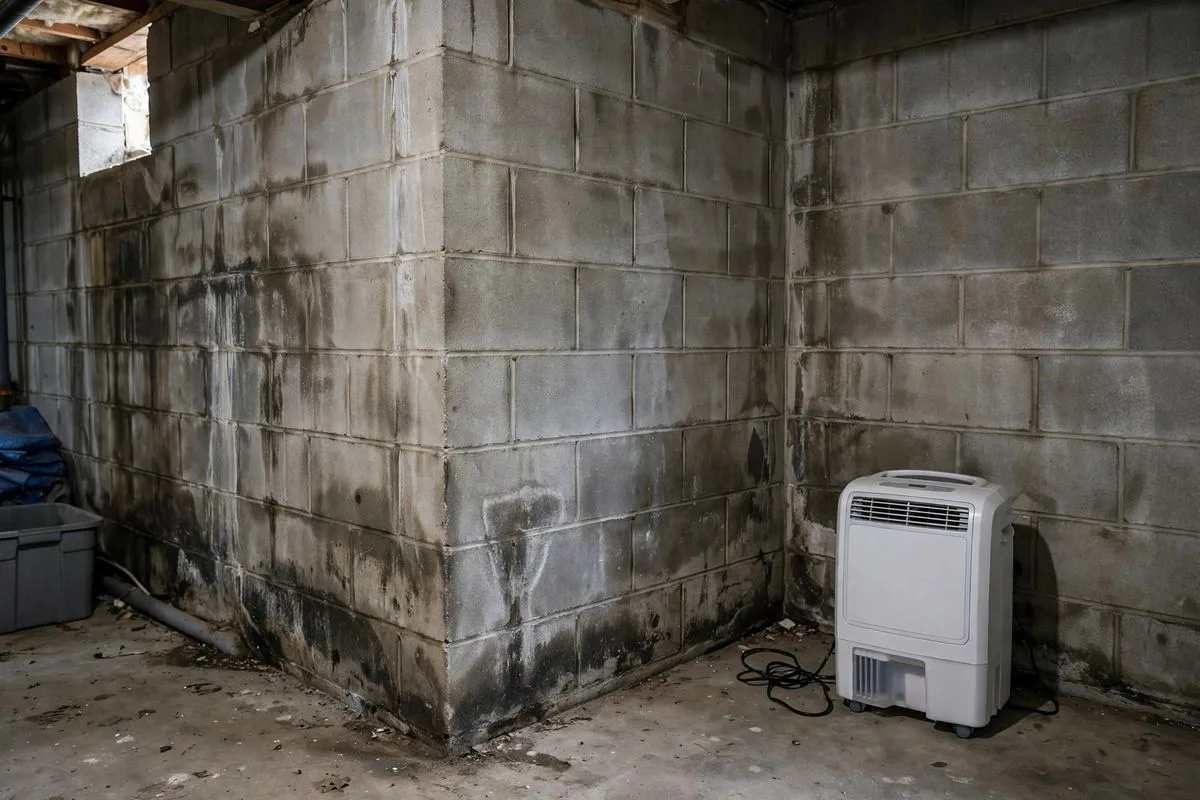
Basements are uncommon in Los Angeles housing — most homes here sit on slabs or raised foundations, so a basement page is not something every homeowner needs. But a minority of LA homes do have them: hillside homes, older properties in the hills and canyons, and some pre-war buildings with lower levels. When mold grows in one of those spaces, it behaves differently from mold upstairs, and it needs a different approach.
Mold Removal Experts LA is a referral service. We do not perform remediation ourselves. We connect you with independent local mold providers who inspect the space, find the moisture source, and carry out the remediation work. The providers in our network handle basement mold from inspection through clearance, and every step below describes what they do — not what this website does.
Why basements grow mold in Los Angeles
Most Los Angeles basements are partly below grade on a hillside, which means one or more walls sit directly against soil. Winter rain soaks that soil, hydrostatic pressure pushes moisture through concrete and block, and the space stays cool and poorly ventilated for most of the year. Add a slow plumbing leak, a failed sump or drain, or a water heater tucked into a corner, and mold has everything it needs: moisture, darkness, and still air.
Because basements are rare here, many LA homeowners do not think to look for mold below grade at all. A musty smell that seems to come from nowhere, damp patches on a lower wall, or allergy symptoms that get worse at home are often the first clues. An inspection by an independent provider can confirm whether mold is present and, just as importantly, where the water is coming from.
Signs of mold in a basement
Basement mold does not always look like the black spots people picture. It can be white, grey, or green, it can look like dust or staining on concrete, and it can hide behind stored boxes, paneling, or finished drywall. These are the signs providers look for during an inspection:
- A persistent musty or earthy smell, even when the space looks clean
- Damp or discoloured patches on concrete, block, or drywall, especially near the floor
- Peeling paint, bubbling plaster, or efflorescence — a white, salty crust on masonry
- Warped or soft wood on stairs, shelving, or framing
- Condensation on pipes, windows, or cold walls
- Health complaints that ease when you spend time away from the house
How providers in our network handle basement mold
Basement remediation follows the same professional standard as any mold job — the IICRC S520 standard for professional mold remediation — adapted to a below-grade space. The provider first inspects and maps the moisture, because removing mold without fixing the water source only buys time before it returns.
- Containment is set up to keep spores from spreading to the rest of the house while work is underway
- Damaged porous materials that cannot be cleaned — such as saturated drywall or carpet — are removed and bagged
- Hard surfaces are cleaned and treated, and the space is dried with dehumidifiers and air movers
- Air filtration runs during and after the work to capture airborne spores
- A final check confirms the area is dry and the moisture source has been addressed
The moisture source matters more than the mold
In a hillside basement, the moisture source is often outside the house: grading that slopes toward the foundation, a clogged or missing gutter, or a downspout that dumps rainwater against the wall. Inside, the usual suspects are plumbing leaks, a failing water heater, or condensation on cold surfaces. A provider who only removes the visible mold and leaves the water problem in place has not finished the job.
That is why the inspection matters. Providers in our referral network are expected to identify the source and explain it plainly before any work starts, so you can decide what to fix and in what order. If the fix involves a plumber, a roofer, or a drainage contractor, that work is separate from the mold remediation itself, and the provider should say so.
What affects the cost of basement mold work
Basement jobs vary widely because the size of the affected area, the materials involved, and the moisture source all change the scope. A small surface patch on a concrete wall is a different job from a finished basement with saturated drywall and carpet throughout. No honest price can be given before an inspection, and this site publishes no prices of its own. For reported market ranges from published sources, see our cost guide, which labels every figure as a reported range from a named source and explains the factors that move a quote up or down.
What to expect during a basement remediation visit
A basement remediation visit starts with the inspection, not with demolition. The provider walks the space with a moisture meter, checks the walls and floor for dampness, and looks for the source — a leak, a drainage problem, or condensation. If the basement is finished, the provider may need to open a small section of drywall to see inside the wall cavity. The findings are explained before any work is agreed, and the quote that follows should cover the inspection findings, the scope of the removal, the drying plan, and the verification step.
During the work itself, the basement is contained off from the rest of the house, and the provider removes the affected materials, cleans the hard surfaces, and sets up dehumidifiers and air movers to dry the space. Drying a below-grade space takes longer than drying a room upstairs, because the walls and floor are cooler and the air moves less — the provider measures moisture rather than guessing by time. Once the readings are clear and the moisture source is fixed, the containment comes down and the space is ready for rebuilding, if any rebuilding is needed.
Related pages
How a referral works
- Tell us about the mold. Where it is, how large the area looks, and whether there has been a leak or flood.
- We connect you with independent local providers. They do the inspection, testing, removal or remediation — we do not perform the work ourselves.
- The provider contacts you. They arrange the visit, explain what they found, and agree the work with you directly.
Frequently asked questions
How much does basement mold remediation cost in Los Angeles?
There is no standard basement price, because so few LA homes have basements. Angi reports a basement range of $544–$3,264, while Fun Guy Inspections reports $2,500–$6,500 for crawlspace and attic work, which is the closest comparable scope. Your price comes from the provider's quote after inspection.
Do I need drainage work as well as mold remediation?
Possibly. If the moisture comes from grading, gutters, or groundwater pressure, remediation alone will not hold. That work is done by a drainage or waterproofing contractor, not the mold provider, and the provider should tell you when a separate trade is needed.
Can I use my basement while remediation is underway?
It depends on the containment setup and the size of the job. Small, well-contained jobs often allow the rest of the house to be used normally, but the contained area itself is off limits while work is underway. The provider will explain the arrangement before starting.
What should I do before the provider arrives?
Clear access to the basement stairs and the affected wall, move stored boxes away from damp areas, note when you first noticed the smell or stain, and take photographs. Do not move items that are visibly moldy without protection — leave those for the provider.
How is a finished basement different from an unfinished one?
A finished basement has drywall, insulation, and flooring that may need to be removed and rebuilt. An unfinished basement is usually concrete or block, which can often be cleaned in place. The finished version is the larger job, and the provider's quote should say which materials are involved.
Does homeowners insurance cover basement mold?
It depends on the cause and the policy. Sudden water damage is often covered; long-term seepage usually is not. The insurance guide explains the distinction in general terms — it is not insurance advice.
Request a referral
Please note: online requests are not connected yet — the request form for this domain is still being set up. Your details are not sent when you submit this form. For the fastest response, please call (945) 422-7665.
Need mold help in Los Angeles?
Tell us where the mold is and how large the area looks. We will connect you with an independent local provider.
Request a referral Call (945) 422-7665
Mold Removal Experts LA is a referral service. We do not perform mold inspection, testing, or remediation. We connect you with independent local providers who do the work.