Real Estate Mold Inspection in Los Angeles
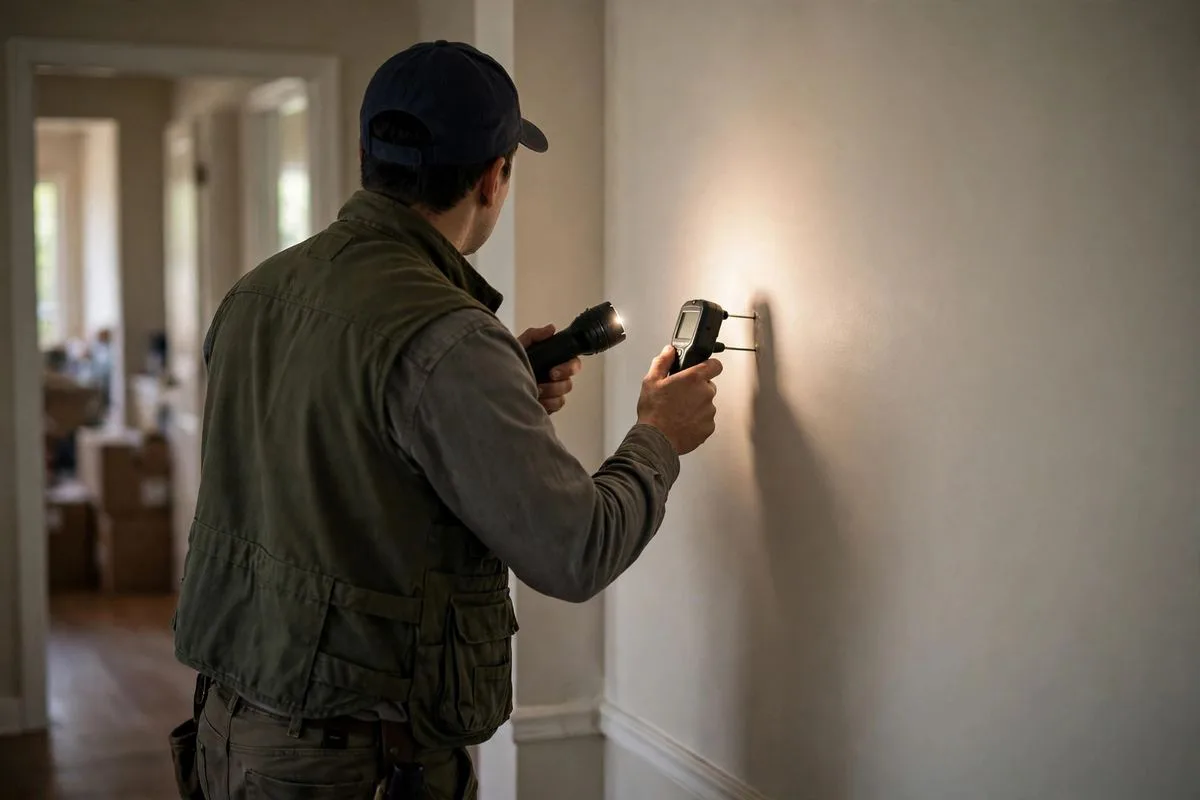
A mold inspection during a real estate transaction answers a different question from a general home inspection: not whether the house is in good shape overall, but whether there is mold, where the moisture is coming from, and what it will take to fix. Buyers need that answer before they close. Sellers need it before a buyer's inspector finds the problem for them.
Mold Removal Experts LA is a referral service. We do not perform inspections ourselves. We connect buyers, sellers, and agents with independent local mold providers who inspect the property and supply written findings. This page explains what a transaction inspection covers, how it differs from a general home inspection, and how the results are used.
This page is written for home buyers, sellers, and the agents who guide them through a transaction — the people who need a written answer they can rely on before money changes hands.
One timing note: schedule the mold inspection early in the contingency period, so there is time for laboratory results and for a remediation quote before the deadline.
Why mold comes up in Los Angeles transactions
LA's older housing stock is the main reason. Pre-1978 homes with original plumbing, flat roofs, and raised foundations are common, and a general home inspector will often note a stain, a musty smell, or evidence of past water damage without being able to say how much mold is present or what it will cost to fix. That is the point at which a dedicated mold inspection is requested — usually by the buyer, sometimes by the seller, and often on the agent's advice.
Mold findings affect transactions in practical ways. A buyer may ask for a credit or a repair before closing. A seller who finds and fixes the problem first keeps control of the timing and the scope. Either way, the inspection report is the document everyone works from, so it needs to be clear, specific, and written down.
What a real estate mold inspection covers
The provider inspects the areas where mold is most likely in LA homes: bathrooms, kitchens, attics, crawl spaces, and any room with a stain, a smell, or a history of leaks. Moisture readings are taken on walls, ceilings, and floors, and the provider looks for the moisture source — a roof leak, a plumbing leak, or poor ventilation — not just the growth itself.
Air or surface sampling may be included when the extent of growth is unclear, or when the buyer or seller wants laboratory results to support the findings. The written report should describe what was found and where, the moisture readings, the likely source, and what remediation would involve. A verbal opinion alone is not enough for a transaction; the report is the deliverable.
How inspection differs from testing and remediation
Inspection, testing, and remediation are three different services, and a transaction may need one, two, or all three. An inspection is a visual assessment with moisture mapping and a written scope. Testing is air or surface sampling sent to a laboratory. Remediation is the physical removal work. California has no law separating assessment and remediation the way Texas does, but the conflict-of-interest standard still matters: the provider who inspects should not be the one who certifies their own remediation work, and an independent clearance check after remediation is the standard our network is held to.
For buyers: what to do with the findings
A buyer who receives a mold report has three practical options: ask the seller to remediate before closing, ask for a credit and handle the work after closing, or walk away if the scope is larger than the deal can bear. Which option makes sense depends on the size of the problem and the terms of the purchase agreement. The inspection report gives the buyer the facts to make that call, and a remediation quote gives the numbers. Neither is a substitute for the buyer's agent's advice on the contract itself.
For sellers: inspecting before listing
A seller who inspects before listing learns about the problem on their own timetable. Fixing it first means the buyer's inspection does not become a renegotiation, and the seller has the documentation — the inspection report, the remediation record, and the clearance results — to show the work was done properly. Disclosure duties still apply: a seller must disclose known material defects, and a mold problem that was found and fixed is still a fact to disclose honestly. This site does not give legal advice on disclosure; sellers should follow their agent's and attorney's guidance.
Using the inspection report in the transaction
The inspection report is the document the transaction runs on, so it is worth understanding what it contains and how each party uses it. The report describes what was found and where, the moisture readings, the likely moisture source, and what remediation would involve. The buyer uses it to decide whether to proceed, to ask for a repair, or to ask for a credit. The seller uses it to understand the scope and to arrange the work. The agents use it to document the condition of the property and to support the negotiation.
A good report is specific: it names the rooms, gives the readings, and identifies the source. A vague report — one that says mold was found but not where, or that recommends remediation without a scope — is hard to act on. When you commission an inspection, ask the provider what the report will contain and when you will receive it, especially if the transaction has a deadline. If sampling is included, ask when the laboratory results will arrive, because the report is not complete until they do.
Related pages
How a referral works
- Tell us about the mold. Where it is, how large the area looks, and whether there has been a leak or flood.
- We connect you with independent local providers. They do the inspection, testing, removal or remediation — we do not perform the work ourselves.
- The provider contacts you. They arrange the visit, explain what they found, and agree the work with you directly.
Frequently asked questions
Should a buyer get a mold inspection even if the general inspection found nothing?
It is worth considering for older homes, for any home with a musty smell, and for any home with a history of leaks or water damage — even when the general inspector noted nothing. A general inspection is broad; a mold inspection is focused on moisture and growth the generalist is not equipped to assess.
Can a mold finding be used to renegotiate the price?
Yes, in practice. A buyer with an inspection report and a remediation quote has the facts to ask for a repair, a credit, or a price adjustment. How that request is made is a matter for the purchase agreement and the buyer's agent.
What if mold is found after closing?
It depends on the contract, the disclosures, and whether the seller knew about the problem. A buyer in that position should speak with their agent and, where the amounts justify it, a real estate attorney. The inspection report from before closing is the key document.
Do sellers have to disclose past mold?
Sellers must disclose known material defects, and a mold problem that was found and fixed is still a fact to disclose honestly. The exact disclosure duties depend on the transaction and the forms used, and sellers should follow their agent's and attorney's guidance.
How long do laboratory results take in a transaction?
Laboratory analysis typically takes a few days after sampling. If the transaction has a deadline, tell the provider at the start so the sampling and the report are scheduled around it — a rushed inspection that skips sampling is worse than a scheduled one that includes it.
Can the same provider inspect and remediate in a transaction?
California has no law forbidding it, but the professional standard says the inspector should not certify their own remediation work. In a transaction, where both sides need to trust the findings, an independent inspection followed by independent verification is the arrangement that holds up.
Request a referral
Please note: online requests are not connected yet — the request form for this domain is still being set up. Your details are not sent when you submit this form. For the fastest response, please call (945) 422-7665.
Need mold help in Los Angeles?
Tell us where the mold is and how large the area looks. We will connect you with an independent local provider.
Request a referral Call (945) 422-7665
Mold Removal Experts LA is a referral service. We do not perform mold inspection, testing, or remediation. We connect you with independent local providers who do the work.