Carpet Mold Removal in Los Angeles
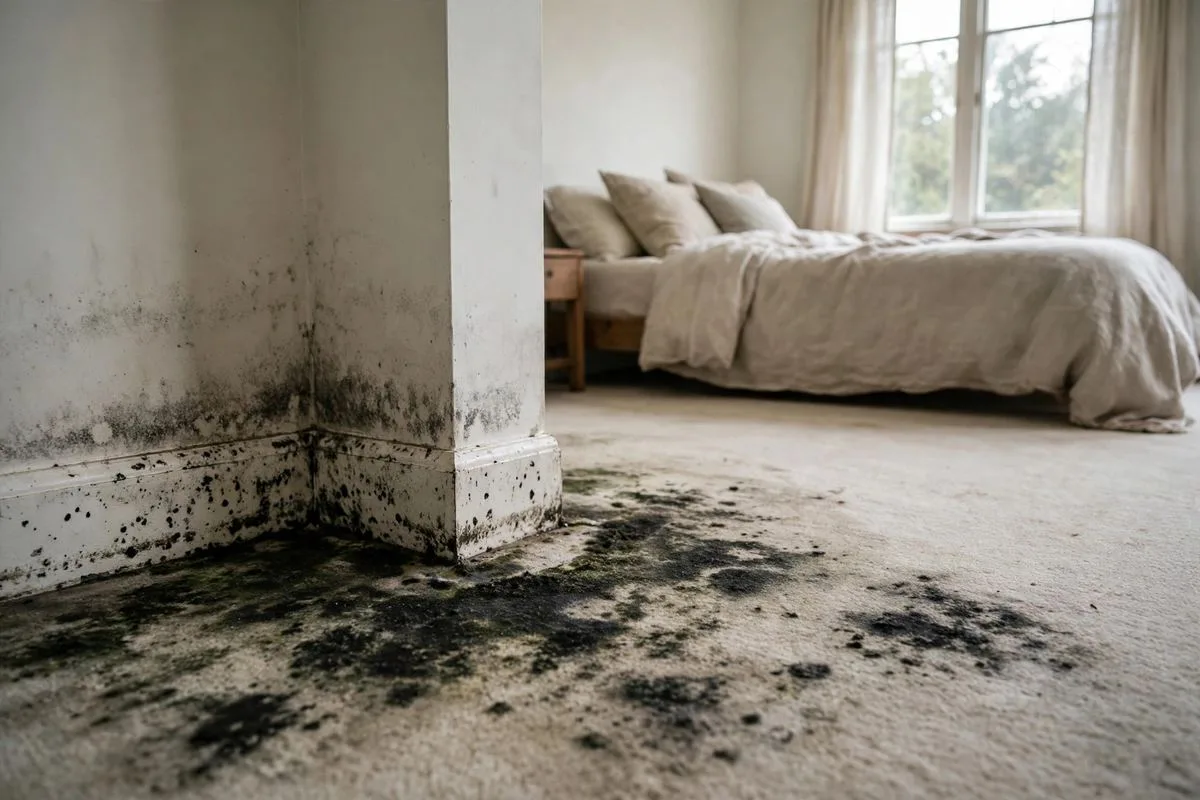
Carpet is one of the worst places for mold to grow, because it hides the problem. Carpet and padding absorb water from a leak, a spill, or a flooded room, and they stay damp long after the surface feels dry. Mold grows in the padding and on the subfloor underneath, where it cannot be seen — and often cannot be cleaned — without lifting the carpet.
Mold Removal Experts LA is a referral service. We do not perform the work ourselves. We connect you with independent local mold providers who inspect wet or suspect carpet, determine whether it can be cleaned or must be removed, and carry out the work. This page explains how carpet mold is assessed and handled.
If the carpet got wet from a leak or a spill, the clock matters more than the appearance. Note the date the carpet got wet and how long it stayed wet — that is the first thing the provider will ask, because mold can begin growing within 24 to 48 hours. If the carpet is still damp, do not cover it with rugs or furniture, and do not run a dehumidifier over it and assume it is dry; the padding underneath dries far more slowly than the surface.
How carpet gets moldy in Los Angeles homes
The most common cause is a water event: a plumbing leak, a dishwasher or washing-machine overflow, a roof leak that reaches the floor, or water tracked in after a storm. In LA, slab-on-grade homes add another route — moisture wicking up through the concrete slab into the padding, especially in older homes without a proper vapour barrier. Air-conditioning condensation dripping onto carpet is another quiet source.
Carpet padding is the real problem. It is a sponge: it holds water, it dries slowly, and it gives mold a large surface to grow on. The carpet fibres on top may look and feel dry while the padding underneath is still wet. That is why a carpet that was wet for more than a day or two should be checked by a provider, even if it looks fine now.
Signs of mold in or under carpet
Carpet mold is usually smelled before it is seen. These are the signs providers look for:
- A musty smell in a room that gets stronger near the floor, or after the carpet is vacuumed
- Carpet that feels damp, or a dark stain that appears after a leak
- Allergy-type symptoms that are worse in one carpeted room
- A musty odour that returns after carpet cleaning
- Discolouration or dark patches on the carpet backing, visible when a corner is lifted
- A floor that feels soft or spongy under the carpet
Can moldy carpet be cleaned, or must it be removed?
It depends on how wet it got, how long it stayed wet, and what is underneath. Surface mold on a carpet that was briefly damp can sometimes be cleaned by a professional. But carpet and padding that stayed wet for a day or more, or that grew mold in the padding, usually cannot be cleaned back to sound condition — the growth is inside the material, not on it, and cleaning the surface leaves the padding contaminated.
A provider lifts a corner or a section to inspect the padding and subfloor, checks moisture levels, and advises whether cleaning or removal is the right call. When removal is needed, the affected carpet and padding are cut out, bagged, and removed under containment, and the subfloor is cleaned and dried before new flooring goes down.
What happens to the floor underneath
Once the carpet is out, the provider cleans and dries the subfloor — concrete slab or wood — and checks it with a moisture meter. A concrete slab that wicked moisture up may need drying time before new flooring is installed. A wood subfloor that has stayed wet may need treatment or partial replacement. The floor should not be covered again until it is dry, or the new flooring will trap the same problem.
What affects the cost
Carpet mold jobs range from a small contained section to a whole room or several rooms, and the scope depends on how much carpet and padding must come out, what the subfloor needs, and whether the water source is fixed. Replacement flooring is a separate cost from the remediation itself. No price can be quoted before an inspection. Our cost guide explains the factors that move a quote and publishes reported market ranges from named sources.
After the carpet is removed: drying and reflooring
Once the affected carpet and padding are out, the subfloor needs time to dry before anything new goes down. The provider sets up dehumidifiers and air movers and measures the subfloor with a moisture meter over several days. A concrete slab that wicked moisture up from the ground dries slowly, and a wood subfloor that stayed wet may need longer. The temptation is to refloor quickly, because the room looks bare — but laying new flooring over a damp subfloor traps the moisture and starts the same problem again under the new floor.
When the readings are clear, the choice of replacement flooring is yours, and the provider can advise on what works well in a room that has had a leak. Hard flooring — tile, luxury vinyl, or sealed wood — dries better and shows leaks sooner than carpet, which is why many homeowners switch after a carpet mold job. If you do choose carpet again, a moisture-resistant padding and a habit of checking the floor after any leak will protect it. Whatever goes down, the water source must be fixed first, and the subfloor must be dry — those two conditions are non-negotiable.
Related pages
How a referral works
- Tell us about the mold. Where it is, how large the area looks, and whether there has been a leak or flood.
- We connect you with independent local providers. They do the inspection, testing, removal or remediation — we do not perform the work ourselves.
- The provider contacts you. They arrange the visit, explain what they found, and agree the work with you directly.
Frequently asked questions
How soon after a leak should wet carpet be checked?
Within 24 to 48 hours, according to EPA guidance — that is how quickly mold can begin growing on damp materials. Carpet that was wet for more than a day or two should be checked by a provider even if the surface feels dry, because the padding underneath stays wet longer.
Can carpet be dried with fans instead of removed?
Fans dry the surface, not the padding. A carpet can feel dry on top while the padding underneath is still wet and growing mold. The provider measures the padding's moisture directly, and that reading — not the feel of the surface — decides whether the carpet can stay.
What happens to furniture sitting on wet carpet?
Move it if you can do so safely, because furniture legs wick moisture up and can be damaged, and the carpet underneath dries more slowly with weight on it. Tell the provider what was sitting where, so they can check those spots.
Is it safe to walk on moldy carpet?
Limit use of the room until the provider has inspected it. Walking on it disturbs the carpet and can release spores into the air. Keep children and pets out of the affected room in the meantime.
Does steam cleaning kill mold in carpet?
No. Steam cleaning removes surface dirt and adds moisture, which can make the problem worse. It does not reach mold growing in the padding or on the subfloor underneath.
What flooring is best after carpet mold?
That is your choice, and the provider can advise on what dries well and resists moisture — hard flooring generally dries better than carpet in a room that has had a leak. The key step is making sure the subfloor is dry and the water source is fixed before anything new goes down.
Request a referral
Please note: online requests are not connected yet — the request form for this domain is still being set up. Your details are not sent when you submit this form. For the fastest response, please call (945) 422-7665.
Need mold help in Los Angeles?
Tell us where the mold is and how large the area looks. We will connect you with an independent local provider.
Request a referral Call (945) 422-7665
Mold Removal Experts LA is a referral service. We do not perform mold inspection, testing, or remediation. We connect you with independent local providers who do the work.