Post-Remediation Verification in Los Angeles
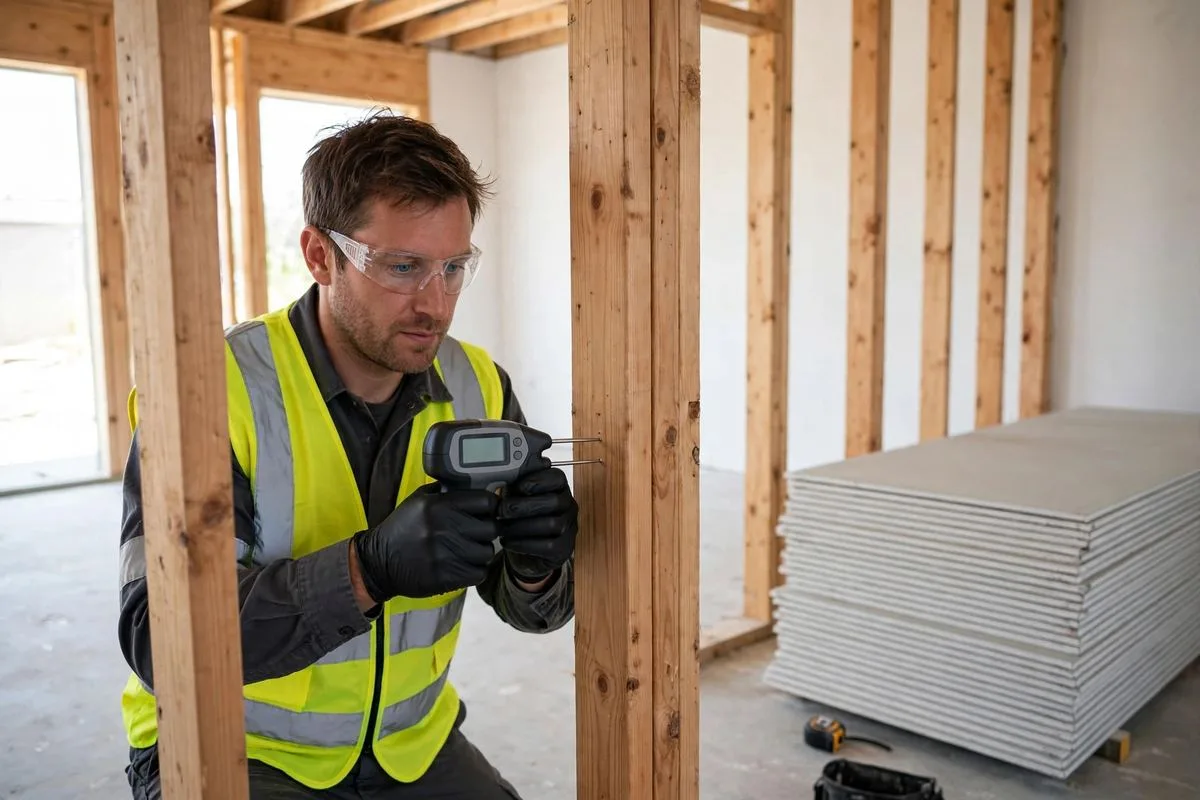
Post-remediation verification, also called clearance testing or PRV, is the independent check that a mold remediation job is complete. After the affected materials have been removed, the area has been cleaned and dried, and the moisture source has been fixed, a provider who did not do the remediation work inspects the area and takes air or surface samples to confirm that the contamination has been removed and the area is dry. Mold Removal Experts LA does not perform verification itself. This site connects you with independent local providers, and the verifier who takes your samples is separate from the provider who did the remediation.
Verification is the defined end point of a remediation job. Without it, a job ends when the remediation company says it is finished, and there is no independent check on that claim. With it, the job ends when a separate provider confirms the result. That separation is the point of the IICRC S520 standard's treatment of clearance as a separate function, and it is the reason this site treats verification as a service in its own right rather than an optional extra.
What post-remediation verification includes
The verifier starts with a visual inspection of the remediated area, checking that the affected materials have been removed, that the remaining surfaces are clean, and that the area is dry. They take moisture readings on the structure to confirm it has reached the dry standard, and they check that the moisture source has been fixed. They then take air samples inside the contained area and compare them with samples from outside the containment and outdoors, and surface samples where appropriate.
The samples go to a laboratory for analysis, and the written report combines the laboratory results with the visual inspection and the moisture readings. The report states whether the area has passed clearance, and if it has not, what still needs to be done. That report is the document you keep: it is the record of the job for a landlord, an insurer, a home buyer, or your own files.
- Visual inspection of the remediated area
- Moisture readings confirming the structure is dry
- Air samples compared with outdoor and unaffected-room samples
- Surface samples where appropriate
- Written report stating whether the area passed clearance
Why clearance testing must be independent
A company that certifies its own work has a financial interest in the result. It has already been paid for the remediation, and a failed clearance test means more work at its own cost. That is a conflict of interest, and it is why the IICRC S520 standard treats clearance as a separate function from remediation. An independent verifier has no stake in the outcome: they are paid for the verification itself, and their only interest is in an accurate result.
The referral model on this site exists to make that separation practical. The provider who remediates your home is not the provider who verifies it, and the provider who verifies it is not the provider who inspected it. When you request verification, you can ask directly whether the verifier has any connection to the remediation company, and what the arrangement is. A verifier who answers plainly is a verifier worth working with.
- A company certifying its own work has a financial interest in the result
- The IICRC S520 standard treats clearance as a separate function
- An independent verifier is paid for the verification itself
- This referral site connects you with separate providers for each step
- Ask whether the verifier has any connection to the remediation company
What the verifier looks for
The verifier looks for three things: that the affected materials have been removed, that the area is clean and dry, and that the moisture source has been fixed. The visual inspection checks the first. The moisture readings check the second. The laboratory results check the third, in the sense that elevated spore levels in the contained area, compared with the outdoor baseline, indicate that contamination remains.
The verifier also checks the work that is easy to miss: the inside of a wall cavity that was opened, the subfloor under a removed section of flooring, and the insulation that was replaced. If any of those areas still show moisture or contamination, the report says so, and the remediation provider returns to address it before the containment comes down. That is the purpose of verification: to catch what was missed while the containment is still in place and the fix is still cheap.
- Affected materials removed
- Area clean and dry, confirmed by moisture readings
- Moisture source fixed
- Laboratory results compared with the outdoor baseline
- Hidden areas checked: wall cavities, subfloor, replaced insulation
What happens if clearance fails
If the verification does not pass, the report states what still needs to be done, and the remediation provider returns to address it. That may mean removing more material, cleaning again, or drying for longer. The containment stays in place while that work happens, and verification is repeated after it. A failed clearance is not a disaster. It is the system working as designed: the independent check caught something the remediation missed, and the fix happens before the area is rebuilt.
The cost of a repeat verification is a question to settle in advance. Ask the remediation provider and the verifier, before work begins, who pays for a repeat test if the first one fails, and how many rounds are included. Getting that in writing avoids a dispute at the point when the job should be finishing.
- The report states what still needs to be done
- The remediation provider returns to address it
- Containment stays in place while the fix happens
- Verification is repeated after the fix
- Settle who pays for a repeat test before work begins
Verification as the basis for comparable bids
An independent inspection report and a defined scope of work are also the basis for getting comparable bids. When several remediation providers quote the same defined scope, their prices can be compared fairly, because they are pricing the same work. Without a defined scope, each provider quotes a different job, and the prices cannot be compared at all.
That is one of the practical benefits of the separation this site is built around. The inspection produces the scope, the scope produces comparable quotes, and the verification confirms the work that was quoted was actually done. Each step depends on the one before it, and each step is performed by a separate provider. The mold inspection page explains the inspection and the written scope in more detail.
- A defined scope lets several providers quote the same work
- Without a scope, prices cannot be compared fairly
- The scope comes from the independent inspection
- Verification confirms the quoted work was actually done
When verification is needed
Verification is needed after any remediation job that involved containment and removal of materials. It is particularly important when the job is large, when the growth was in several rooms, when a landlord or insurer requires documentation, when a home sale is involved, or when the occupants include people with health sensitivities. In those cases, the written clearance report is the record that the job was done properly.
Verification is less necessary after a small surface cleanup that did not involve removal of materials or containment. A provider can advise whether verification is appropriate for your job, and the written scope should state whether it is included. If a remediation provider asks you to skip verification, that is a reason to get a second opinion.
- After any job involving containment and removal
- Particularly important for large jobs and multi-room jobs
- When a landlord, insurer or home sale needs documentation
- When occupants include people with health sensitivities
- Less necessary after a small surface cleanup without removal
Related pages
How a referral works
- Tell us about the mold. Where it is, how large the area looks, and whether there has been a leak or flood.
- We connect you with independent local providers. They do the inspection, testing, removal or remediation — we do not perform the work ourselves.
- The provider contacts you. They arrange the visit, explain what they found, and agree the work with you directly.
Frequently asked questions
What is post-remediation verification?
It is the independent check that a mold remediation job is complete. A provider who did not do the remediation inspects the area, takes moisture readings, and takes air or surface samples for laboratory analysis, then issues a written report stating whether the area has passed clearance.
Why should clearance testing be independent?
Because a company that certifies its own work has a financial interest in the result. The IICRC S520 standard treats clearance as a separate function from remediation, and an independent verifier has no stake in the outcome. This referral site connects you with separate providers for each step.
What happens if clearance testing fails?
The report states what still needs to be done, and the remediation provider returns to address it while the containment is still in place. Verification is then repeated. A failed clearance is the system working as designed: the independent check caught something the remediation missed.
How long does clearance testing take?
The on-site visit is usually an hour or two. The laboratory analysis takes a few business days, and the written report follows the laboratory result. The provider will tell you the expected timing when they take the samples.
Do I need clearance testing after every mold job?
It is needed after any job involving containment and removal of materials, and particularly when a landlord, insurer or home sale needs documentation. It is less necessary after a small surface cleanup that did not involve removal. A provider can advise whether it is appropriate for your job.
What does a clearance report contain?
The visual inspection findings, the moisture readings, the laboratory results for the air and surface samples, the comparison with outdoor and unaffected-room samples, and a statement of whether the area has passed clearance. It is the record of the job for a landlord, an insurer, a buyer or your own files.
Request a referral
Please note: online requests are not connected yet — the request form for this domain is still being set up. Your details are not sent when you submit this form. For the fastest response, please call (945) 422-7665.
Need mold help in Los Angeles?
Tell us where the mold is and how large the area looks. We will connect you with an independent local provider.
Request a referral Call (945) 422-7665
Mold Removal Experts LA is a referral service. We do not perform mold inspection, testing, or remediation. We connect you with independent local providers who do the work.