Mold Inspection in Los Angeles
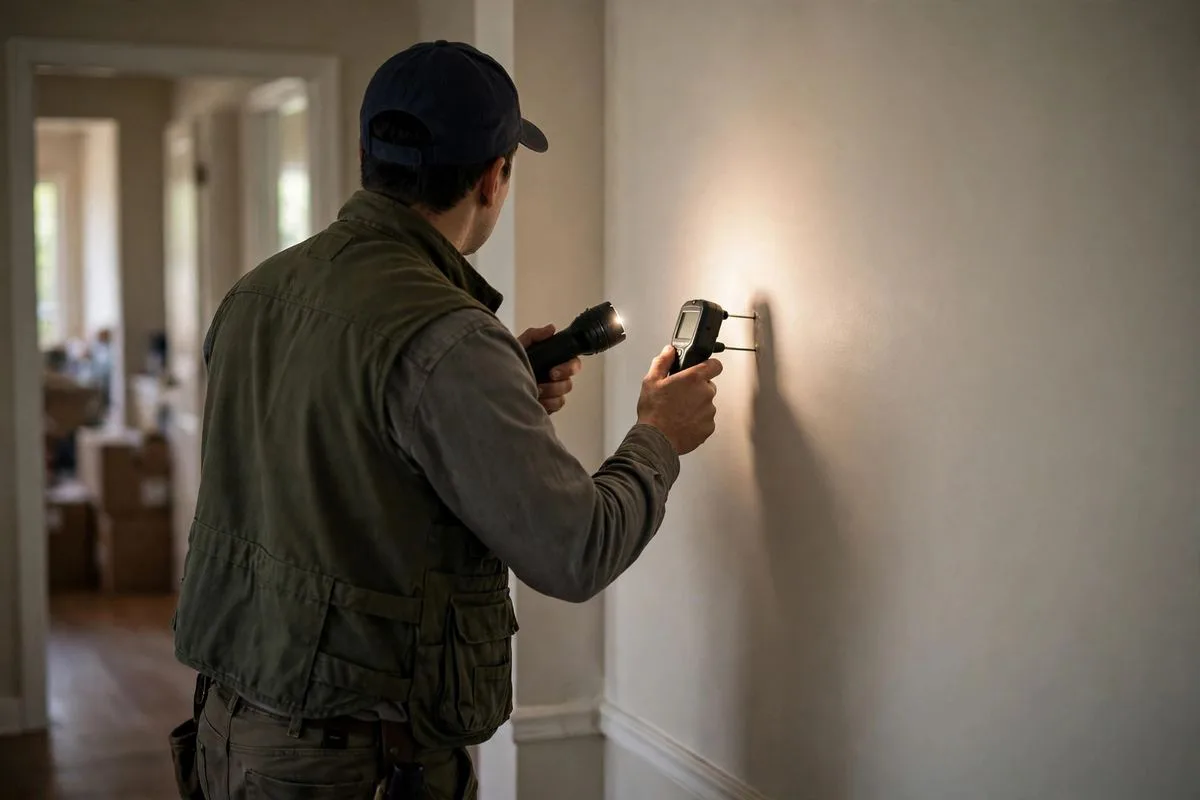
A mold inspection in Los Angeles is a visual assessment of a home or building, carried out by an independent provider, to find visible mold growth, trace the moisture that caused it, and produce a written scope of what needs to happen next. The inspector walks the affected areas, looks for growth and water damage, and takes moisture readings through walls, floors and ceilings. Mold Removal Experts LA does not perform inspections itself; this site connects you with independent local providers.
Inspection is different from testing. Inspection is the visual assessment and moisture mapping described above. Testing is the taking of air or surface samples for laboratory analysis. An inspection can stand on its own when the growth is visible and the cause is clear; testing is added when the growth is hidden, when the type needs documenting, or when a landlord, insurer or home sale requires laboratory evidence.
What a mold inspection covers
The inspector starts with the areas you already know about: the visible growth, the stain, the musty smell, the room that feels damp. They then look wider, because mold rarely stays where it first appears, checking the rooms above and below, the plumbing and fixtures nearby, the roof and attic above, and the crawl space or slab below, for water stains, peeling paint, warped flooring and discoloration.
Moisture readings are a central part of the inspection. A moisture meter reads through drywall, wood and flooring and shows where water is held inside materials that look dry on the surface. The inspector maps those readings across the affected area, which shows how far the water spread and how far the growth is likely to extend, and that map is the basis for the written scope.
- Visual assessment of affected areas and nearby rooms
- Moisture readings through walls, floors and ceilings
- Moisture mapping showing how far water spread
- Identification of the likely water source
- Written scope of what needs to happen next
How long an inspection takes
A straightforward inspection of one or two affected rooms usually takes an hour or two. A larger inspection, covering a whole house, several rooms, an attic and a crawl space, takes longer, depending on the size of the property, the number of affected areas and how accessible the spaces are.
The inspection itself is not disruptive: the inspector does not open walls or remove materials. If growth is suspected inside a wall cavity, the inspector notes it and recommends the next step, which may be testing or a small exploratory opening by a remediation provider. The written scope you receive afterwards describes the findings and the recommended next steps.
- One or two rooms: usually an hour or two
- Whole house or several areas: longer, depending on size and access
- Attics and crawl spaces add time
- No walls are opened during a standard inspection
- A written scope follows the visit
What the inspection report contains
The written scope, sometimes called the inspection report, is the product of the inspection. It describes where growth was found, how large each area is, what the moisture readings showed, and what the likely water source is. It lists what should be removed, cleaned or dried, and notes any areas needing further investigation, such as a wall cavity that could not be seen.
That document matters beyond the remediation quote. A landlord needs it to show a tenant what will be fixed. A home buyer needs it to understand what they are buying. An insurer needs it to assess a claim. Ask for the report in writing, and keep a copy.
- Where growth was found and how large each area is
- Moisture readings and how far water spread
- The likely water source
- What should be removed, cleaned or dried
- Areas needing further investigation
Can the same company do mold inspection and mold removal?
California has no law that forbids one company from doing both mold inspection and mold removal on the same job, unlike some other states where the two are legally separated. The question is therefore not a legal one in California. It is a question of trust, and the answer comes from the IICRC S520 standard, which treats inspection, remediation and clearance as separate functions.
The reason is the conflict of interest. A company that finds the mold, sells the cleanup and then certifies its own cleanup has no independent check on its work. The referral model on this site avoids that arrangement: the provider who inspects your home is not the provider who remediates it, and the provider who verifies the work afterwards is separate from both.
- California has no law separating inspection and remediation on the same job
- The IICRC S520 standard treats them as separate functions
- One company doing both has a financial interest in both findings
- This referral site connects you with separate providers for each step
- Ask any provider directly how they handle the separation
When an inspection is the right first step
An inspection is the right first step whenever the problem is not fully understood: a musty smell with no visible source, a stain whose cause is unclear, growth that keeps returning after cleaning, a leak that was fixed but may have left hidden damage, or any situation where a written scope is needed for a landlord, an insurer or a home sale.
An inspection is less necessary when the growth is small, visible, on a hard surface, and the cause is obvious and already fixed. But when in doubt, an inspection is the cheaper step: it costs less than a remediation job based on a guess, and it produces the scope every later step depends on.
- Musty smell with no visible source
- Growth that keeps returning after cleaning
- A leak that was fixed but may have left hidden damage
- A written scope needed for a landlord, insurer or sale
- Uncertainty about whether professional remediation is needed
Pre-purchase inspection: buying a home in Los Angeles
A mold inspection before buying a home is one of the most useful inspections there is. Los Angeles buyers often decide quickly, and the home may have had water damage, a renovation, or a period of vacancy that the seller has not disclosed. The inspector walks the home, takes moisture readings, and documents the findings in a written report the buyer can use to negotiate, plan the work, or walk away.
Renovation is a particular reason for a pre-purchase inspection: opening a wall, replacing a floor, or disturbing insulation can release growth hidden for years. An assessment before the renovation starts documents the condition of the home and the moisture history, so the renovation does not become a mold discovery halfway through.
- Documents the condition of the home before closing
- Gives the buyer evidence to negotiate, plan or walk away
- Renovation disturbs dormant mold hidden for years
- Moisture documentation before closing protects the buyer
Comparable bids on the same defined scope
An independent inspection report, with a written scope of work, is the basis for getting comparable bids. When several remediation providers quote the same defined scope, their prices can be compared fairly, because they are pricing the same work. Without a defined scope, each provider quotes a different job, and the numbers mean nothing side by side.
That is one of the practical benefits of the separation this site is built around. The inspection produces the scope, the scope produces comparable quotes, and the verification confirms the quoted work was actually done. When you request an inspection, ask for the written report and the defined scope, and use it to get your remediation quotes on the same terms.
- A defined scope lets several providers quote the same work
- Without a scope, prices cannot be compared fairly
- The scope comes from the independent inspection
- Verification confirms the quoted work was actually done
What affects the cost of a mold inspection
No price is quoted on this site, because inspection pricing depends on the size of the property, the number of affected areas, whether testing is included, and the provider who performs it. Only the provider who has discussed your job can quote it.
Be cautious about an inspection that is offered without a price and without a written report, particularly when it is tied to a cleanup bid from the same company. The inspection is a professional service with a written product, and it should be priced and documented as one. Ask what the inspection includes, whether testing is included or separate, and when the written report will arrive.
- Size of the property and number of affected areas
- Whether testing is included or separate
- Accessibility of attics and crawl spaces
- The written report is part of the service, not an extra
Related pages
How a referral works
- Tell us about the mold. Where it is, how large the area looks, and whether there has been a leak or flood.
- We connect you with independent local providers. They do the inspection, testing, removal or remediation — we do not perform the work ourselves.
- The provider contacts you. They arrange the visit, explain what they found, and agree the work with you directly.
Frequently asked questions
How much is a mold inspection?
It depends on the size of the property, the number of affected areas, and whether testing is included. No price is quoted on this site, because only the provider who has discussed your job can quote it. Ask the provider what the inspection includes and whether the written report is part of the price.
How do I check for mold in my house?
Look for visible growth, water stains, peeling paint, warped flooring and musty smells, and check the rooms above and below any stain. But visible signs only show part of the problem. A professional inspection adds moisture readings through walls and floors, which reveal water and growth that cannot be seen.
Can the same company do mold inspection and mold removal?
California has no law forbidding it, but the IICRC S520 standard treats inspection, remediation and clearance as separate functions, because a company that finds the problem, sells the fix and certifies its own work has no independent check. This referral site connects you with separate independent providers for each step.
Do I need mold testing as well as an inspection?
Not always. An inspection is enough when the growth is visible and the cause is clear. Testing is worth adding when the growth is hidden, when the type of mold needs to be documented, or when a landlord, insurer or home sale requires laboratory evidence.
What should I do before the inspector arrives?
Note when you first saw the growth or the stain, whether there has been a leak, and which rooms are affected. Clear access to the affected areas if you can. Avoid disturbing the growth before the visit, because disturbing it can spread spores into the air.
Will the inspector open my walls?
No. A standard inspection is visual, with moisture readings taken through surfaces. If growth is suspected inside a wall cavity, the inspector notes it and recommends the next step, which may be testing or a small exploratory opening by a remediation provider.
How do I choose a mold inspector I can trust?
Ask whether the inspector also does remediation on the same job, whether the inspection produces a written report, and whether clearance testing after any remediation will be independent. A provider who answers those questions plainly, and who puts the scope in writing, is a provider worth working with.
Request a referral
Please note: online requests are not connected yet — the request form for this domain is still being set up. Your details are not sent when you submit this form. For the fastest response, please call (945) 422-7665.
Need mold help in Los Angeles?
Tell us where the mold is and how large the area looks. We will connect you with an independent local provider.
Request a referral Call (945) 422-7665
Mold Removal Experts LA is a referral service. We do not perform mold inspection, testing, or remediation. We connect you with independent local providers who do the work.