Mold Testing in Los Angeles
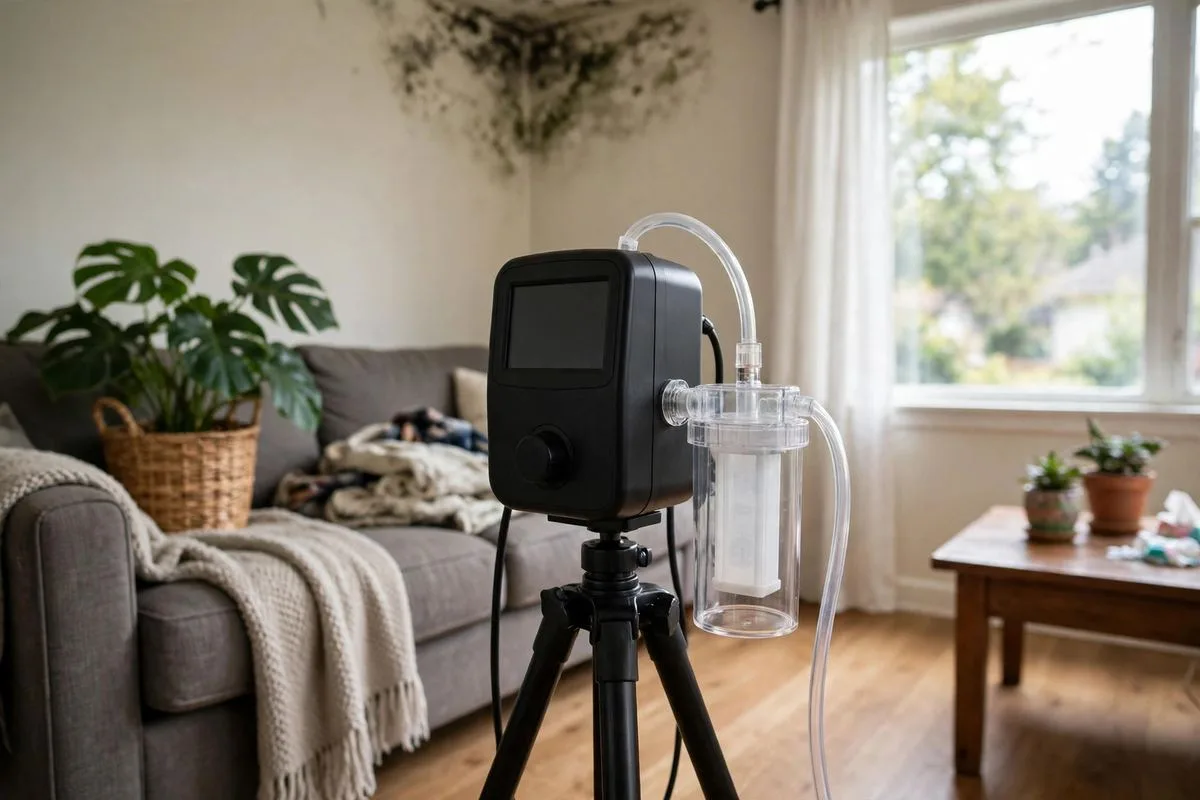
Mold testing in Los Angeles is the taking of air or surface samples from a home or building and sending them to a laboratory for analysis, to identify the types and concentrations of mold present. Testing is different from inspection. Inspection is a visual assessment with moisture readings. Testing adds laboratory evidence: what kinds of mold are in the air or on a surface, and in what amounts, compared with the air outside or in unaffected rooms. Mold Removal Experts LA does not perform testing itself. This site connects you with independent local providers, and the provider who takes your samples arranges the laboratory analysis.
Testing is not needed for every mold job. When the growth is visible, the cause is clear, and the decision is simply to remediate, an inspection alone is often enough. Testing earns its place when the growth is hidden, when the type of mold needs to be documented for a landlord, an insurer or a home sale, when a musty smell persists with no visible source, or when clearance testing is needed after remediation to confirm the work is complete.
Air sampling and surface sampling
Air sampling measures the mold spores in the air of a room. A pump draws a measured volume of air through a cassette or onto a slide, and the laboratory counts and identifies the spores it captures. The result is compared with a sample taken outdoors at the same time, and with samples from unaffected rooms. That comparison is what makes the result meaningful: indoor air normally contains some spores, and the question is whether the indoor levels and types are elevated relative to the outdoor baseline.
Surface sampling tests a specific spot: a visible growth on drywall, a stain on wood, a patch on grout. A swab, a tape lift or a bulk sample of the material itself is sent to the laboratory, which identifies the mold present. Surface sampling answers a different question from air sampling. It tells you what is growing on that surface, not what is floating in the air of the room. A provider chooses the method that matches the question being asked, and a thorough job may use both.
- Air sampling: spores in the air, compared with an outdoor baseline
- Surface sampling: swab, tape lift or bulk sample of a specific spot
- Air sampling shows what is airborne; surface sampling shows what is growing there
- A thorough job may use both methods
What the laboratory analysis tells you
The laboratory report identifies the genera of mold present, such as Aspergillus, Penicillium, Cladosporium or Stachybotrys, and reports the concentration of each in the sample. It does not diagnose illness, and it does not say whether a home is safe. It is evidence about the mold in the building, and it is interpreted alongside the inspection findings: where the growth is, how large it is, and what the moisture source is.
That interpretation matters. A laboratory result on its own, without the inspection context, can be misleading. Elevated spores in one room may trace to a small, contained growth, or to a large hidden problem behind a wall. The provider who ordered the testing explains the results in the context of what they saw in the home, and the written report combines both. If a testing provider sends you laboratory numbers with no interpretation, ask for one.
- The genera of mold present, such as Aspergillus or Stachybotrys
- The concentration of each type in the sample
- Results are compared with outdoor and unaffected-room samples
- The laboratory does not diagnose illness or declare a home safe
- Results must be interpreted alongside the inspection findings
Black mold testing
Black mold testing is surface or air sampling aimed at identifying Stachybotrys chartarum, the dark mold that grows on cellulose-rich materials such as drywall and wood that have stayed wet. Stachybotrys is identified by its appearance under the microscope in the laboratory, not by the color of the growth alone, because many molds look dark and only laboratory analysis can confirm which one is present.
Testing for black mold is worth doing when the growth is dark and the type matters for the scope of work, for a landlord or insurer, or for a home sale. It is not a health test. If you have health concerns about mold exposure, those belong to a doctor, not to a mold test. The black mold remediation page explains how Stachybotrys growth is handled once it is identified.
- Stachybotrys is confirmed by laboratory analysis, not by color alone
- Many molds look dark; only the lab can confirm which one is present
- Testing is useful when the type matters for scope, landlord or sale
- Testing is not a health test; health questions belong to a doctor
When testing is worth paying for, and when it is not
Testing is worth paying for when the answer changes a decision. It changes the decision when the growth is hidden and testing is the only way to confirm it, when a landlord or insurer requires documentation, when a home sale needs evidence, when a musty smell persists with no visible source, and when clearance testing is needed after remediation. In those cases, the laboratory result is the evidence the next step depends on.
Testing is less useful when the growth is visible, the cause is obvious, and the decision is already made to remediate. In that case, testing adds cost without changing the scope of work. A provider who recommends testing should be able to say what decision the result will change. If they cannot, the inspection alone may be enough, and that is a reasonable outcome.
- Worth it: hidden growth, documentation for landlord or insurer, home sale
- Worth it: persistent musty smell with no visible source
- Worth it: clearance testing after remediation
- Less useful: visible growth with an obvious cause and a decision already made
- Ask what decision the test result will change
How long mold testing takes
Sampling itself is quick: an air sample takes minutes per room, and surface samples take minutes per spot. The time is in the laboratory analysis. Standard laboratory turnaround is usually a few business days, and the provider will tell you the expected timing when they take the samples. Some laboratories offer faster turnaround, and the provider can explain whether that is available and what it involves.
The written report follows the laboratory result. It combines the laboratory findings with the inspection context and the provider's interpretation, and it is the document you keep. If remediation follows, the report becomes part of the scope. If clearance testing follows remediation, the same laboratory process is used again, and the results are compared with the original baseline.
- Sampling takes minutes per room or per spot
- Laboratory analysis usually takes a few business days
- The written report combines lab results with inspection context
- Clearance testing repeats the same process after remediation
What affects the cost of mold testing
No price is quoted on this site, because testing pricing depends on the number of samples, the type of sampling, the laboratory turnaround, and the provider who performs it. Only the provider who has discussed your job can quote it. The cost guide on this site explains the factors that move pricing for mold work generally. When you request testing, ask how many samples are planned, which rooms they cover, and whether the laboratory fee and the written report are included in the quote.
- Number of air and surface samples
- Type of sampling and laboratory analysis
- Laboratory turnaround time
- Whether the laboratory fee and written report are included
Related pages
How a referral works
- Tell us about the mold. Where it is, how large the area looks, and whether there has been a leak or flood.
- We connect you with independent local providers. They do the inspection, testing, removal or remediation — we do not perform the work ourselves.
- The provider contacts you. They arrange the visit, explain what they found, and agree the work with you directly.
Frequently asked questions
How do I test for mold in my house?
A provider takes air or surface samples and sends them to a laboratory for analysis. Air sampling measures spores in the air of a room, compared with an outdoor baseline. Surface sampling tests a specific growth on drywall, wood or grout. The laboratory report identifies the mold types and concentrations, and the provider interprets the results alongside the inspection findings.
How do you test for black mold?
By surface or air sampling sent to a laboratory, where Stachybotrys chartarum is identified under the microscope. Color alone cannot confirm black mold, because many molds look dark. Only laboratory analysis can confirm which mold is present.
How long does mold testing take?
Sampling takes minutes per room or per spot. Laboratory analysis usually takes a few business days, and the written report follows the laboratory result. The provider will tell you the expected timing when they take the samples.
How much does mold testing cost?
It depends on the number of samples, the type of sampling, the laboratory turnaround, and the provider. No price is quoted on this site, because only the provider who has discussed your job can quote it. Ask how many samples are planned and whether the laboratory fee and report are included.
Do I need mold testing or just an inspection?
An inspection is enough when the growth is visible and the cause is clear. Testing is worth adding when the growth is hidden, when the type of mold needs to be documented for a landlord, insurer or home sale, or when a musty smell persists with no visible source.
Can mold testing tell me if mold is making me sick?
No. Mold testing identifies the types and concentrations of mold in a building. It does not diagnose illness or assess health risk. Health questions about mold exposure belong to a doctor.
What is the difference between mold inspection and mold testing?
Inspection is a visual assessment with moisture readings that finds growth and traces its cause. Testing is the taking of air or surface samples for laboratory analysis. Inspection answers where the problem is; testing adds laboratory evidence about what is growing there.
Request a referral
Please note: online requests are not connected yet — the request form for this domain is still being set up. Your details are not sent when you submit this form. For the fastest response, please call (945) 422-7665.
Need mold help in Los Angeles?
Tell us where the mold is and how large the area looks. We will connect you with an independent local provider.
Request a referral Call (945) 422-7665
Mold Removal Experts LA is a referral service. We do not perform mold inspection, testing, or remediation. We connect you with independent local providers who do the work.