Mold Containment in Los Angeles
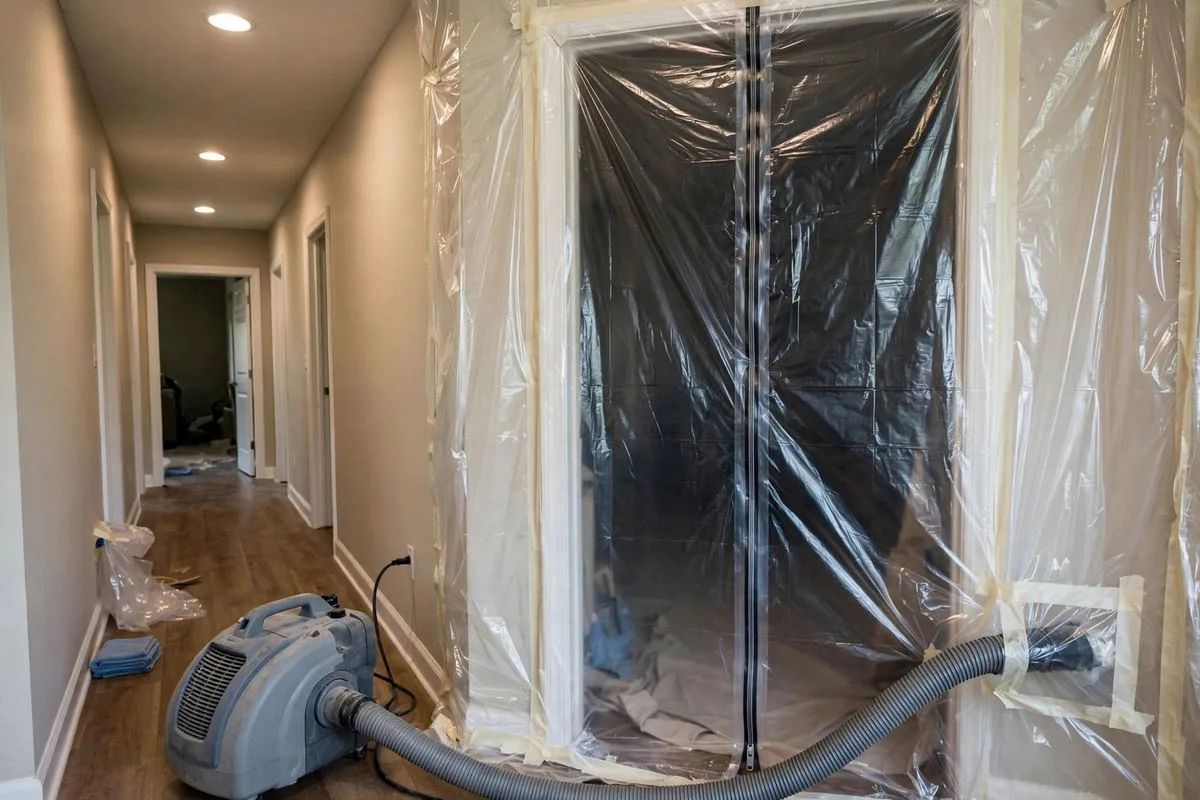
Containment is the part of mold remediation that most homeowners never see explained, but it is what separates professional remediation from a cleanup. Before any moldy material is disturbed, the work area is sealed off from the rest of the home, and air is pulled through filters so that spores released during the work do not drift into clean rooms.
Mold Removal Experts LA is a referral service. We do not perform the work ourselves. We connect you with independent local mold providers who set up containment as part of their remediation work. This page explains what containment is, why it matters, and what it should look like when a provider does it properly.
One thing homeowners sometimes ask: can the containment be taken down early if the work looks done? No — it stays up until the area is cleaned, dried, and checked. Taking it down early is how spores reach the rooms the barrier was protecting.
What mold containment is
Containment is a physical barrier — usually plastic sheeting sealed with tape — that separates the work area from the rest of the building, combined with negative air pressure. A fan pulls air out of the contained area through a HEPA filter, so air flows into the work area from the rest of the house rather than out of it. Any spores released when moldy drywall or carpet is cut out are drawn toward the filter instead of drifting through the home.
The IICRC S520 standard for professional mold remediation sets out how containment should be built and maintained. The size and type of containment depend on the size of the job: a small contained area may need only a single barrier, while a large or whole-house job may need a full enclosure with a decontamination chamber for workers entering and leaving.
Why containment matters
Disturbing mold releases spores into the air — far more than sit there when the mold is left alone. Cutting out drywall, pulling up carpet, or sanding wood all release a burst of spores. Without containment, those spores settle in other rooms, in ductwork, and on furniture, and the remediation can end up spreading the problem it was meant to solve.
Containment also protects the people doing the work and the people living in the home. Workers wear protective equipment inside the contained area, and the barrier keeps the rest of the household's living space separate while work is underway. For larger jobs, that separation is what allows a household to stay in the home while remediation proceeds in one area.
What proper containment looks like
A homeowner does not need to know how to build containment, but it helps to know what to look for. A provider who takes containment seriously will:
- Seal the work area with plastic sheeting before any moldy material is disturbed
- Run a HEPA-filtered air machine that keeps air pressure negative inside the enclosure
- Cover doorways, vents, and returns that connect the work area to the rest of the home
- Bag moldy materials inside the contained area before carrying them out
- Keep the containment in place until the work is done and the area has been cleaned and checked
When containment is not needed — and when it is essential
Not every mold job needs full containment. A small patch of surface mold on a tile wall, cleaned in place, does not. But any job that involves cutting out drywall, removing carpet, or disturbing a large area of growth does. The provider decides based on the size of the affected area and the materials involved, and should be able to explain that decision in plain terms.
One warning sign to watch for: a provider who proposes to tear out moldy material with no barrier and no air filtration at all. The research on this market flags demolition without containment as a red flag when hiring, and it is worth asking any provider how they plan to contain the work before agreeing to it.
Containment and post-remediation verification
Containment stays up until the remediation is finished and the area has been cleaned. Only then is it taken down — and only after the provider has checked that the area is dry and the moisture source is fixed. In many jobs, an independent post-remediation verification follows: a separate provider inspects and, when sampling is included, tests the air to confirm the area is clear. That separation — one provider remediates, another verifies — is the standard our referral model is built around.
Containment, health, and household safety during remediation
Containment is not only about protecting the rest of the house from spores — it is also about keeping the household safe while work is underway. Inside the contained area, the provider's workers wear protective equipment and the air is filtered. Outside it, the household goes about its day, separated from the work by the barrier. That separation is the point: the work area is a work site, and the rest of the home stays a home.
We do not give health advice, and this page does not make health claims. What we can say is practical: keep children and pets out of the work area, do not enter the contained area while work is underway, and follow the provider's instructions about the space. If anyone in the household has a health condition that makes them sensitive to dust or mould spores, tell the provider before the work starts so they can plan the containment and the schedule accordingly. The provider's job is to keep the work contained; your job is to respect the barrier while it is up.
Related pages
How a referral works
- Tell us about the mold. Where it is, how large the area looks, and whether there has been a leak or flood.
- We connect you with independent local providers. They do the inspection, testing, removal or remediation — we do not perform the work ourselves.
- The provider contacts you. They arrange the visit, explain what they found, and agree the work with you directly.
Frequently asked questions
What is a HEPA filter, and why does it matter?
A HEPA filter captures very fine particles, including mold spores, from the air passing through it. In containment, the air machine pulls air out of the work area through a HEPA filter, so spores released during the work are trapped rather than spread through the home.
Can I stay home during containment work?
It depends on the size of the job. Containment is designed to separate the work area from the living space, so many households stay home during a contained job in one room. For large or whole-house jobs, the provider will advise whether staying is practical.
What happens if containment is breached during work?
Work stops, the barrier is re-sealed, and the provider cleans any area the breach may have affected. A provider who notices a breach and carries on regardless is not following the standard — ask how they handle it before the work starts.
Do workers wear protective equipment inside containment?
Yes. Workers inside a contained area wear protective equipment — respirators, gloves, and coveralls — as standard practice. The equipment protects the workers and prevents spores from being carried out of the enclosure on clothing.
Is containment needed for outdoor mold work?
No. Containment is for enclosed indoor spaces, where spores can spread through the building. Outdoor mold on a patio or fence is a different matter and does not need a sealed enclosure.
How do I know containment was done properly?
Look for sealed plastic sheeting with no gaps, a HEPA air machine running, and covered vents and returns connecting the work area to the rest of the home. Ask the provider to walk you through the setup before work begins — a careful provider will be glad to.
Request a referral
Please note: online requests are not connected yet — the request form for this domain is still being set up. Your details are not sent when you submit this form. For the fastest response, please call (945) 422-7665.
Need mold help in Los Angeles?
Tell us where the mold is and how large the area looks. We will connect you with an independent local provider.
Request a referral Call (945) 422-7665
Mold Removal Experts LA is a referral service. We do not perform mold inspection, testing, or remediation. We connect you with independent local providers who do the work.