How Long Does Mold Testing Take?
Mold testing usually takes about one to two hours on site, and laboratory results usually take one to three business days after the samples reach the lab. Some labs offer faster turnaround for an additional charge, and some sample types take longer than others. That is the short answer, and the rest of this post explains what happens at each stage, what can make it take longer, and what the report contains when it arrives.
This post is general information about testing, not medical advice. Mold Removal Experts LA is a referral service that connects customers with independent local providers; it does not perform mold work itself.
What happens on site
A mold testing visit usually starts with a visual inspection and moisture mapping, because testing without an inspection is less useful. The provider looks for the moisture source, notes where staining, warping or a musty smell is present, and takes moisture readings in walls, floors and ceilings. That inspection usually takes 30 to 60 minutes in a typical home, and longer in a larger home or an apartment building where more than one unit is involved.
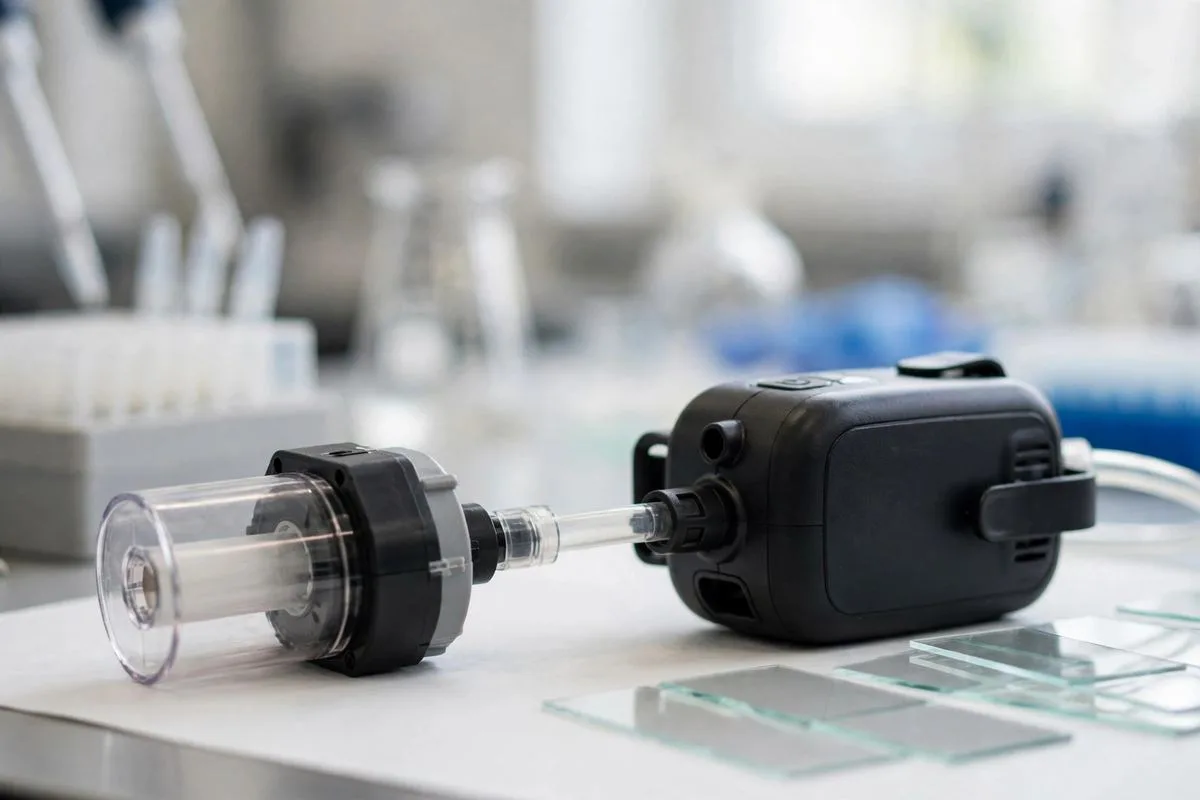
Sampling itself is usually quick. Air samples are taken with a pump that draws a measured volume of air through a cassette, usually for about five to ten minutes per sample. Surface samples are taken with a swab, a tape lift or a bulk sample of material, and each one takes a few minutes. A typical visit involves a small number of samples: one or two indoor air samples, one outdoor control sample for comparison, and one or more surface samples where visible growth is present. The total on-site time is usually about one to two hours, although a large home, a commercial property, or a home with several affected rooms can take longer.
How long the lab takes
After the visit, samples are sent to a laboratory for analysis. The lab identifies the mold types present and counts the spores, and the time it takes depends on the sample type and the lab's workload. Air samples analysed by direct microscopy are usually reported in one to three business days. Cultured samples, where the lab grows the mold to identify it, can take five to seven business days or longer, because the mold needs time to grow. Some labs offer a faster turnaround for an additional charge, and some offer expedited or next-day reporting for air samples, but faster reporting does not change what the sample can show.
Weekends, holidays and shipping time can add days. If samples are taken on a Friday, they may not reach the lab until Monday, and the lab's clock usually starts when the samples arrive, not when they were taken. If a provider says results will take a certain time, ask whether that time is from the visit or from the lab receiving the samples, and whether the lab is accredited. An accredited lab follows recognised methods and quality controls, and its report is more useful if the results are needed for a dispute, a home purchase or a landlord-tenant issue.
What the report contains
A mold testing report usually contains the sample locations, the sample types, the mold types found, the spore counts, and a comparison with the outdoor control sample. The outdoor control matters because mold spores are present in outdoor air, and the question is usually whether indoor levels are higher than outdoor levels, or whether a particular type is present indoors that is not present outdoors. The report may also include the provider's observations, moisture readings, and recommendations for what to do next, such as remediation, further testing, or fixing a leak.
A report does not diagnose health effects, and it does not by itself prove that a particular mold caused a particular symptom. It is an environmental measurement, not a medical one. If the report is needed for a dispute, a home purchase or a landlord-tenant issue, ask the provider whether the report is written in a form that can be used for that purpose, and whether the lab is accredited. The mold testing page and the post-remediation verification page explain what testing and clearance testing cover in more detail.
What can make testing take longer
Testing can take longer when the home is large, when several rooms are affected, when access is limited, or when the source is hidden and needs more investigation before sampling. It can also take longer when the lab needs to culture a sample, when a sample needs to be re-analysed, or when the lab is busy. In a commercial property or an apartment building, testing can take longer because more samples are needed and more areas need to be inspected.
A provider can sometimes speed up the on-site part by asking for information in advance, such as where the staining or smell is, when it appeared, whether there has been a leak, and whether any rooms are occupied. That information helps the provider plan the visit and decide which samples are needed. It does not speed up the lab, but it can avoid a second visit. If a fast result is needed, ask the provider what turnaround the lab offers and what it costs, and whether a faster result is available for the sample type being taken.
Testing, inspection and clearance: three different things
Inspection, testing and clearance testing are three different services, and they take different amounts of time. Inspection is a visual assessment with moisture mapping, and it is usually done in the same visit as testing. Testing is the sampling and laboratory analysis described in this post. Clearance testing, also called post-remediation verification, is a separate check after remediation, to confirm that the area is dry and the work is complete. It usually involves a visual inspection, moisture readings and sometimes air or surface sampling, and its lab turnaround is the same as for initial testing.
The distinction matters because a single visit can include more than one of those services, and the time for the whole job is the sum of its parts. A provider who inspects and tests in one visit can often report the inspection findings on the day of the visit, while the lab results follow in one to three business days. Clearance testing happens after remediation, so it adds a separate visit and a separate lab turnaround. The mold inspection page explains inspection, and the post-remediation verification page explains clearance testing.
Published:
Related pages
Frequently asked questions
Can I get mold test results back quickly?
Some labs offer expedited or next-day reporting for air samples analysed by direct microscopy, usually for an additional charge. Cultured samples take longer, because the mold needs time to grow. Ask the provider what turnaround the lab offers for the sample type being taken, and whether the time is counted from the visit or from the lab receiving the samples.
How should I prepare my home for mold testing?
Do not clean, vacuum or disturb the affected area before the visit, because that can change the results. Note where the staining or smell is, when it appeared, and whether there has been a leak. Keep the room as it normally is, with doors and windows in their usual state, unless the provider asks otherwise.
Does the lab need to be accredited?
Accreditation is not a legal requirement in California for mold labs, but an accredited lab follows recognised methods and quality controls, and its report is more useful if the results are needed for a dispute, a home purchase or a landlord-tenant issue. Ask the provider which lab they use and whether it is accredited.
What does an outdoor control sample do?
It gives a baseline for comparison. Mold spores are present in outdoor air, so the question is usually whether indoor levels are higher than outdoor levels, or whether a type is present indoors that is not present outdoors. Without a control sample, an indoor count is harder to interpret.
Need mold help in Los Angeles?
Tell us where the mold is and how large the area looks. We will connect you with an independent local provider.
Request a referral Call (945) 422-7665
Mold Removal Experts LA is a referral service. We do not perform mold inspection, testing, or remediation. We connect you with independent local providers who do the work.