Drywall Mold Removal in Los Angeles
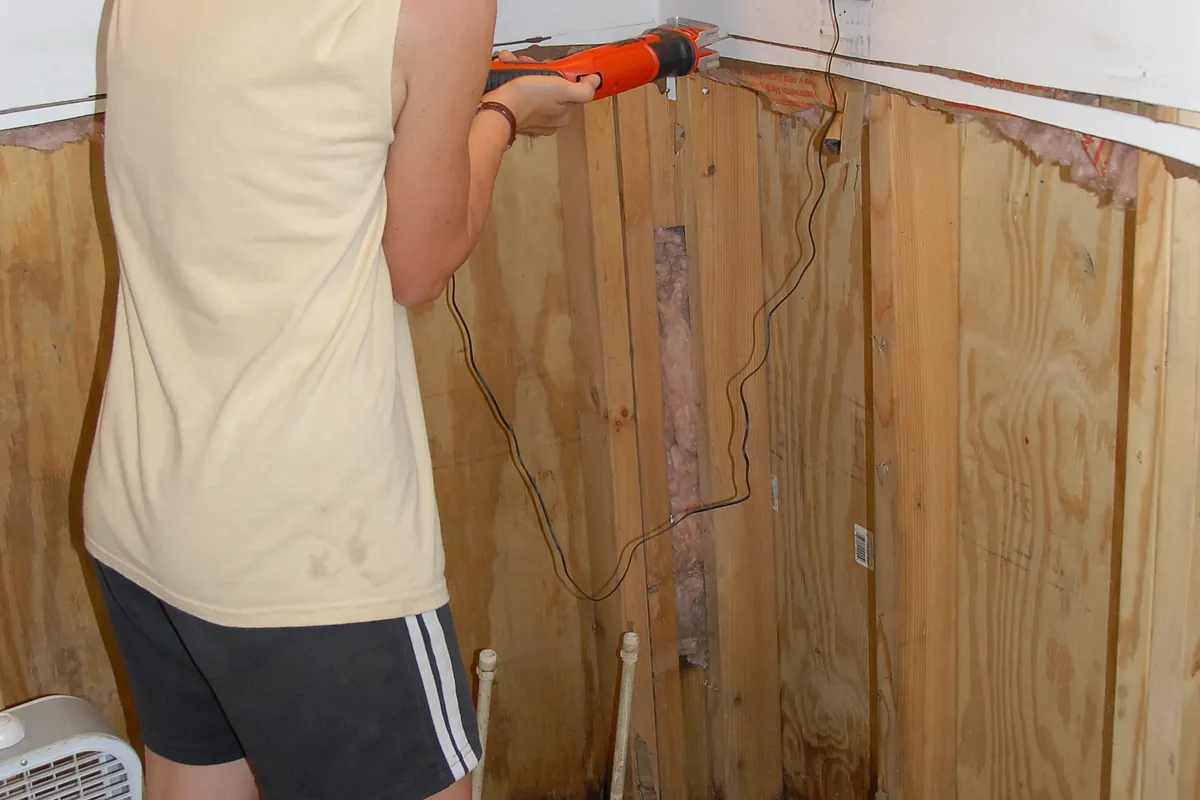
Drywall is one of the first materials mold attacks. Its paper facing and gypsum core soak up water, and once mold grows into the board it cannot be cleaned out — the affected drywall has to be cut out and removed. Our team removes moldy drywall across Los Angeles, from single patches behind a leak to whole walls after flooding.
Call us at (945) 422-7665 or request a free estimate and we will inspect the wall, map the damp, and remove the affected drywall.
Why moldy drywall has to be removed
Drywall is porous: water soaks into it, and mold grows through the paper facing and into the gypsum core. Surface cleaning can lighten the stain on the face of the board, but it cannot reach the growth inside. Painting over it only hides the problem while the growth continues behind the paint.
The growth is often worse than the visible stain suggests. A small patch on the surface can hide a whole section of colonized board and damp insulation in the cavity behind it. Our team takes moisture readings through the wall to map how much drywall has to come out before we cut anything.
- Porous board that soaks up water and cannot be surface-cleaned
- Growth spreading through the paper facing and gypsum core
- Damp insulation and framing hidden in the wall cavity
- Paint and cleaning that hide the problem without fixing it
How we remove moldy drywall
We inspect and take moisture readings first, then contain the area with sheeting and filtered air so spores do not spread through the house while the wall is open. We cut out the affected drywall and insulation, bagging the material inside containment, then clean the framing and any surfaces that can be saved. The cavity is dried and moisture readings are checked before the wall is ready for rebuilding.
We keep the cut as small as the growth allows and explain exactly what will be removed before we start. Once the cavity is dry and clean, new drywall can go up on a sound, dry frame.
After the drywall is out
The moisture source is traced as part of every job — a plumbing leak, a roof leak, a window leak or condensation — so it can be repaired before the wall is closed up. A new wall built onto a wet frame will grow mold again, so drying comes before rebuilding.
If the drywall mold followed a flood or major leak, our mold removal after water damage page covers the wider job. For growth on the wall surface itself, see our wall mold removal service.
Related pages
Our 5-step mold removal process
- Inspection. We inspect the affected area, look for visible growth and moisture sources, and map how far the problem has spread.
- Testing & lab findings. Where needed, we sample air and surfaces. Lab findings tell us what type of mold is growing and how much of it there is.
- Remediation plan. We explain what we found, what needs to be removed, and what it will take to fix the moisture source — before any work begins.
- Removal & remediation. We contain the work area, remove the mold growth and affected materials, clean the surfaces, and dry the space.
- Follow-up & clearance testing. We return to check the work, re-test where needed, and confirm the area is dry and clear before we call the job done.
Frequently asked questions
Can moldy drywall be cleaned?
No, not reliably. Mold grows into the paper facing and gypsum core of drywall, so surface cleaning cannot reach it. Affected drywall has to be cut out and removed.
How do I know if mold is inside my drywall?
Signs include bubbling or peeling paint, a musty smell, spreading dark stains, and soft or crumbling board. Moisture readings taken through the wall confirm damp inside the cavity.
How much drywall do you remove?
Only as much as is affected. We map the damp with moisture readings and cut out the colonized sections, plus a margin of clean board around them. We explain the extent before we start cutting.
Do you remove the insulation behind the drywall?
Yes, when it has been wet and colonized. Wet insulation cannot be cleaned reliably, so it is removed and bagged out with the drywall.
Will you rebuild the wall after removing the drywall?
Our mold work covers removal, cleaning and drying. Rebuilding — new drywall, paint and finishing — is a separate step once the cavity is dry and verified clean. We explain where our work ends and rebuilding begins.
How long does drywall mold removal take?
A single patch may take a day. Several walls, or a wall with a wet cavity that needs drying, takes longer.
Will the mold come back after new drywall goes up?
It can return if the moisture source is not fixed. We trace the leak or condensation that caused it and explain the repair needed before the wall is closed up.
Is moldy drywall covered by insurance?
It depends on the cause — a sudden covered leak is treated differently from long-term damp. Our guide on insurance and mold removal explains what insurers usually look at.
How much does drywall mold removal cost?
It depends on how much drywall and insulation must be removed and how long drying takes. Our mold removal cost guide explains the factors; an inspection gives you a written scope.
How do I book drywall mold removal?
Call us at (945) 422-7665 or request a free estimate. Tell us where the moldy drywall is and whether you know of a leak, and we will arrange an inspection.
Need mold help in Los Angeles?
Tell us where the mold is and how large the area looks. We will arrange an inspection and explain the work before it begins.