Closet Mold Removal in Los Angeles
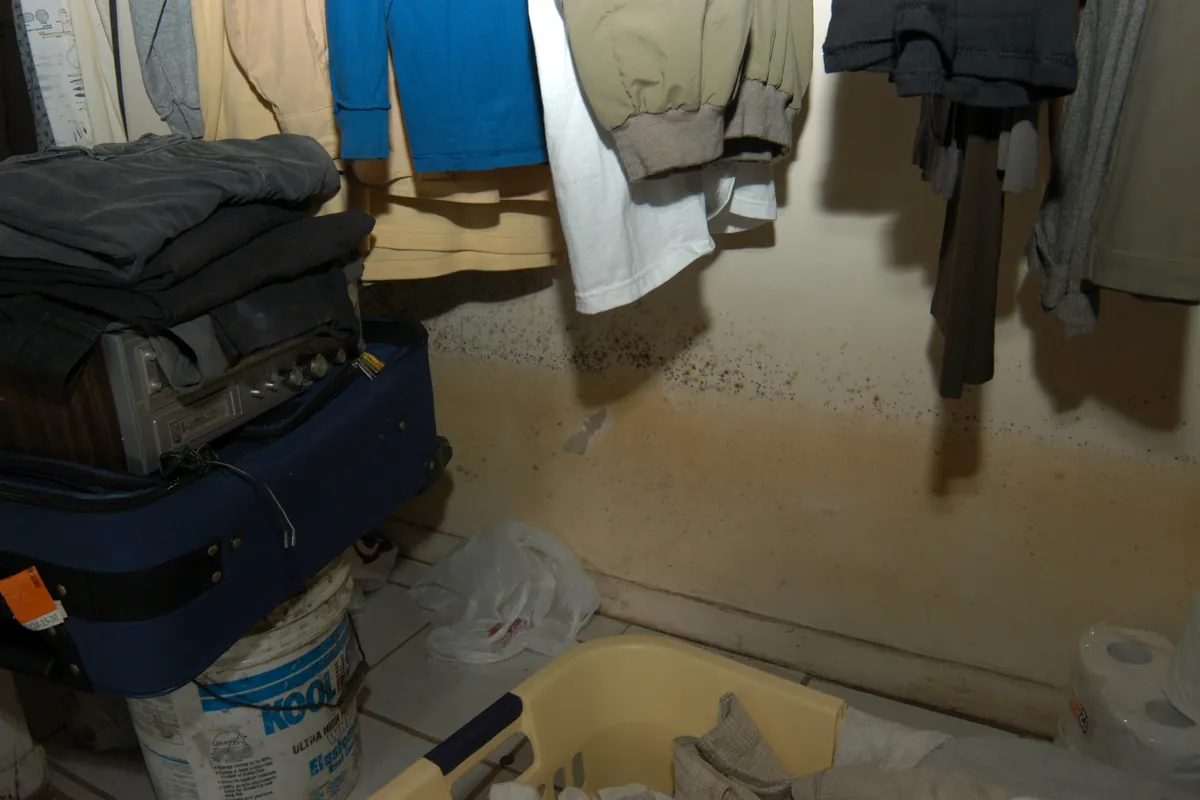
Closets are small, dark, poorly ventilated and often packed full — and mold loves all four. Growth usually starts on the wall a closet shares with a bathroom, on an exterior wall where condensation collects, or after a leak has soaked the closet floor. Our team removes closet mold across Los Angeles, working around the clothes and belongings stored there.
Call us at (945) 422-7665 or request a free estimate and we will inspect the closet, trace the damp, and remove the growth.
Why closets grow mold
The main causes are a shared wall with a bathroom — a shower or toilet leak soaking through — an exterior wall where condensation collects, a leak from above, or damp coming up through the floor. A closet full of clothes blocks air circulation, so the walls stay damp and the growth spreads unnoticed behind hanging clothes and stored boxes.
Closet mold is often found by smell first: a musty odor when the door opens, or clothes that smell damp even when they are clean. By then the growth may cover the back wall and the shelving. Our team takes moisture readings in the closet walls and floor to map how far it has spread.
- Walls shared with a bathroom or shower
- Exterior walls where condensation collects
- Leaks from the room above
- Damp coming up through the closet floor
- Poor ventilation and clothes packed tight against walls
How we remove closet mold
We inspect the closet and take moisture readings, then contain the work area and remove the affected materials — colonized drywall, shelving and flooring where needed. Hard surfaces are cleaned, the structure is dried, and the moisture source is traced so it can be fixed before the closet is put back together.
Clothes and belongings in the closet need care. We advise you on what can be cleaned and what should go, and we work around the items you want to keep. Soft items that have been sitting in damp, moldy air often need washing or professional cleaning.
Keeping a closet mold-free
After removal, the steps that matter are air and dryness: leave the closet door open when you can, do not pack clothes tight against the walls, keep the closet dry, and fix any bathroom leak on the other side of the shared wall promptly. A closet that breathes and stays dry is a closet where mold struggles to return.
If the closet mold comes from a bathroom on the other side of the wall, our bathroom mold removal page covers that side of the problem. For growth on the walls themselves, see our wall mold removal service.
Related pages
Our 5-step mold removal process
- Inspection. We inspect the affected area, look for visible growth and moisture sources, and map how far the problem has spread.
- Testing & lab findings. Where needed, we sample air and surfaces. Lab findings tell us what type of mold is growing and how much of it there is.
- Remediation plan. We explain what we found, what needs to be removed, and what it will take to fix the moisture source — before any work begins.
- Removal & remediation. We contain the work area, remove the mold growth and affected materials, clean the surfaces, and dry the space.
- Follow-up & clearance testing. We return to check the work, re-test where needed, and confirm the area is dry and clear before we call the job done.
Frequently asked questions
What causes mold in a closet?
Usually a leak from a bathroom on the other side of the shared wall, condensation on an exterior wall, a leak from above, or damp through the floor — made worse by poor ventilation and clothes packed against the walls.
Can mold in a closet damage my clothes?
Yes. Clothes stored in a damp, moldy closet can pick up musty smells and staining, and mold can grow on natural fabrics. Washable items can often be laundered; items that cannot be cleaned should be discarded.
Do I need to empty the closet before you arrive?
It helps a great deal. Emptying the closet lets us reach the walls and floor, contain the work area properly, and protect your belongings. We advise you on what to do with items from the closet.
How do you remove mold from closet walls?
We contain the area, remove the colonized drywall and any affected shelving, clean the surfaces that can be saved, dry the structure, and trace the moisture source so it can be fixed before the closet is rebuilt.
How long does closet mold removal take?
A small closet may take a day. Growth that has spread into the wall cavity or the floor takes longer, especially when drying time is included.
Will the mold come back?
It can return if the moisture source is not fixed — a bathroom leak, condensation, or damp from above. We trace the cause and explain the fix before the closet is put back together.
Why does my closet smell musty even when I cannot see mold?
The growth is often behind hanging clothes or inside the wall, where it cannot be seen. A musty smell is a reliable sign of hidden growth, and moisture readings confirm it.
Is closet mold covered by insurance?
It depends on the cause — a sudden leak is treated differently from long-term condensation. Our guide on insurance and mold removal explains what insurers usually look at.
How much does closet mold removal cost?
It depends on how much wall, shelving and floor material must be removed and how long drying takes. Our mold removal cost guide explains the factors; an inspection gives you a written scope.
How do I book closet mold removal?
Call us at (945) 422-7665 or request a free estimate. Tell us where the closet is and what you have noticed — smell, staining, damp clothes — and we will arrange an inspection.
Need mold help in Los Angeles?
Tell us where the mold is and how large the area looks. We will arrange an inspection and explain the work before it begins.