Hidden Mold Removal in Los Angeles
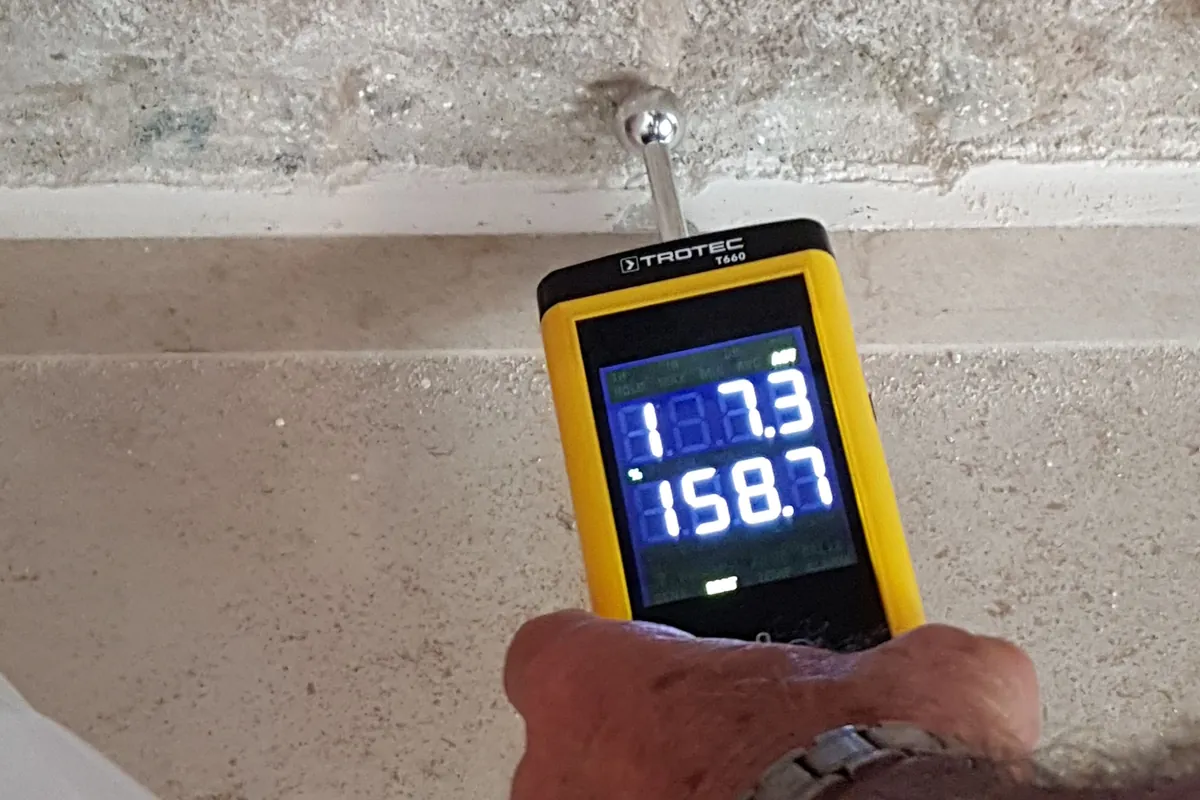
The mold you can see is often only part of the problem. Growth hides behind drywall, under flooring, inside wall cavities, in attics and crawl spaces — anywhere damp air and a hidden leak can feed it while the rooms look clean. Our team finds hidden mold with moisture readings, inspection and testing, then opens up only what needs opening and removes it.
Call us at (945) 422-7665 or request a free estimate if you suspect hidden mold. A musty smell with no visible growth is the most common reason people call us.
Signs of hidden mold
The most common sign is a musty smell that will not go away, especially in one room or near one wall. Other signs are staining, bubbling or peeling paint, warped flooring, damp patches that return after drying, and a feeling that the house smells worse when the heating or air conditioning runs. Sometimes the only sign is that a leak happened months ago and was never fully dried.
Hidden growth often follows a known event: a leak that was fixed but the wall was never opened, a flood that was mopped up but not dried, or a bathroom that has been seeping behind the tiles for years. Our team asks about the history of the house, because the story usually points to where the growth is.
- A musty smell with no visible mold
- Staining, bubbling or peeling paint on walls and ceilings
- Warped or soft flooring with no visible water
- Damp patches that keep returning
- A past leak or flood that was never fully dried
How we find hidden mold
We start with an inspection: a walk through the property, moisture readings in walls, floors and ceilings, and checks of attics, crawl spaces and the spaces behind appliances. Moisture readings are the key tool — damp inside a wall shows up on the meter even when the surface looks dry. Where readings point to a problem, we open a small, targeted section to confirm what is there.
Mold testing can also help: air sampling that shows elevated indoor spores points to a hidden source, even when the exact location still needs finding. We use testing where it adds evidence, and we explain what it will and will not tell you before you pay for it.
How we remove hidden mold
Once the growth is located, the removal follows the same process as any mold job: containment, removal of the affected materials, cleaning of what can be saved, and drying. The difference is the care taken to open only what needs opening — a targeted cut in the right place, found by moisture readings, rather than tearing out whole walls on a guess.
The moisture source is traced as part of the job, because hidden mold is almost always fed by a hidden leak or by condensation in a closed-up space. Finding the growth without finding the water means doing the job twice.
Related pages
Our 5-step mold removal process
- Inspection. We inspect the affected area, look for visible growth and moisture sources, and map how far the problem has spread.
- Testing & lab findings. Where needed, we sample air and surfaces. Lab findings tell us what type of mold is growing and how much of it there is.
- Remediation plan. We explain what we found, what needs to be removed, and what it will take to fix the moisture source — before any work begins.
- Removal & remediation. We contain the work area, remove the mold growth and affected materials, clean the surfaces, and dry the space.
- Follow-up & clearance testing. We return to check the work, re-test where needed, and confirm the area is dry and clear before we call the job done.
Frequently asked questions
How do I know if I have hidden mold?
Common signs are a musty smell with no visible growth, staining or peeling paint, warped flooring, and damp patches that return. Moisture readings and air sampling can confirm it.
Where does mold hide in a house?
Behind drywall, inside wall cavities, under flooring, in attics and crawl spaces, behind kitchen and bathroom fixtures, and inside HVAC ductwork. Anywhere damp air collects out of sight.
How do you find mold you cannot see?
With moisture readings in walls, floors and ceilings, a thorough inspection of attics, crawl spaces and hidden spaces, and air sampling where it adds evidence. Readings point to the damp, and a targeted opening confirms the growth.
Do you have to tear out walls to find hidden mold?
No. We use moisture readings to locate the damp first, then open a small, targeted section to confirm. Whole walls are only removed when the growth itself covers them.
Can mold testing find hidden mold?
Air sampling can show elevated indoor spores that point to a hidden source, but it cannot pinpoint the exact location on its own. We combine testing with moisture readings and inspection to find where the growth is.
What causes hidden mold?
Usually a hidden leak — plumbing inside a wall, a slow roof leak, a shower seeping behind tiles — or condensation in a closed-up space. The growth follows damp that nobody can see.
How long does hidden mold removal take?
It depends on where the growth is and how much material must be removed. Finding it is often the slow part; once located, the removal follows the usual process and timeline.
Will hidden mold come back after removal?
It can return if the moisture source is not fixed. That is why the job includes tracing the hidden leak or condensation that fed it.
How much does hidden mold removal cost?
It depends on how much investigation is needed to find the growth and how much material must be removed. Our mold removal cost guide explains the factors; an inspection gives you a written scope.
How do I book hidden mold removal?
Call us at (945) 422-7665 or request a free estimate. Tell us what you have noticed — smell, staining, a past leak — and we will arrange an inspection.
Need mold help in Los Angeles?
Tell us where the mold is and how large the area looks. We will arrange an inspection and explain the work before it begins.