Attic Mold Removal in Los Angeles
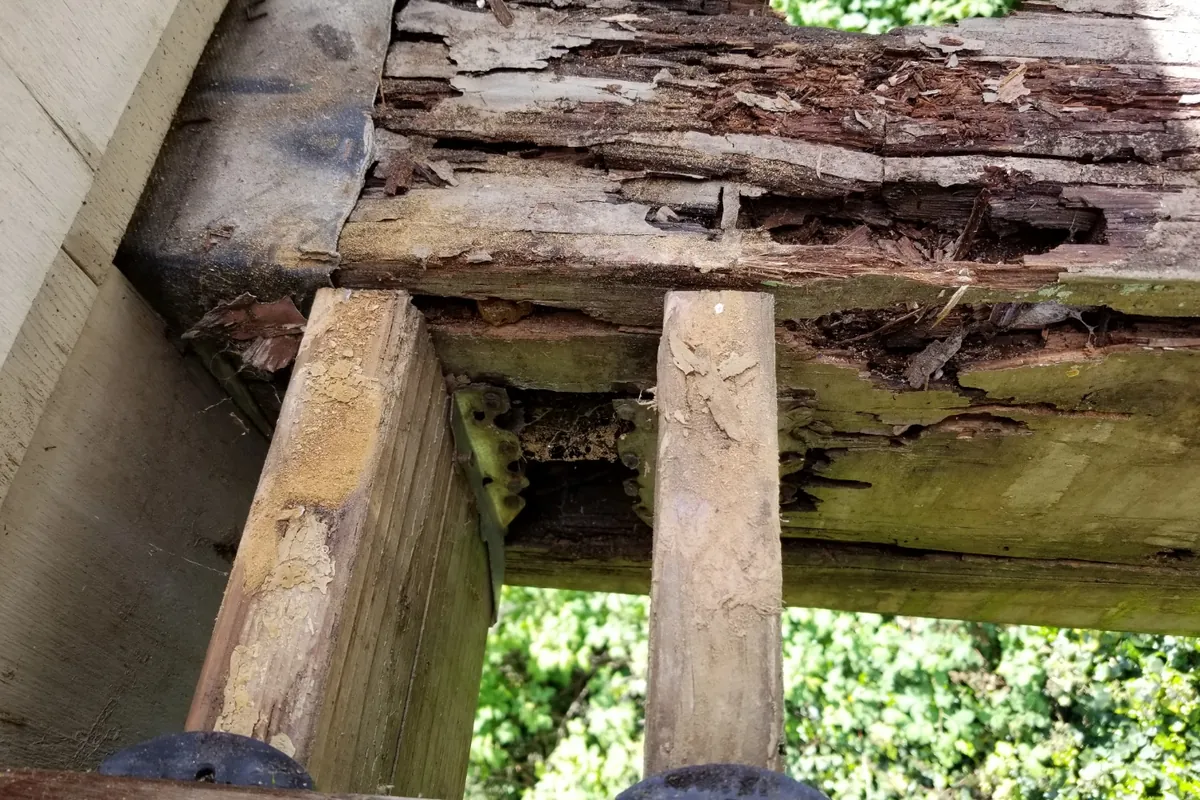
Attic mold is easy to miss and easy to ignore — it grows out of sight, above the ceiling, often for years. It usually starts with a roof leak, a bathroom fan venting into the attic instead of outside, or poor ventilation that lets warm, damp air condense on the underside of the roof. Our team works in attics across Los Angeles, removing growth from sheathing, rafters and insulation and tracing the moisture that caused it.
If you need the attic checked before any removal, our attic mold inspection service covers the inspection itself. For removal, call us at (945) 422-7665 or request a free estimate.
How attic mold starts
The most common cause is a roof leak — a failed flashing, a cracked tile, or a leak around a vent or skylight that soaks the sheathing. The second is ventilation: bathroom and kitchen fans that dump warm, moist air into the attic instead of outside, or soffit and ridge vents that are blocked or missing. The third is condensation, where warm air from the house meets a cold roof deck and leaves the wood damp.
Once the wood stays damp, mold follows. Growth on roof sheathing often appears as dark staining across the plywood, while insulation that has been wet and colonized usually has to be removed rather than cleaned. Our team checks the roof, the vents and the fans as part of the job, because removing the growth without fixing the cause means it grows back.
- Roof leaks around flashing, vents and skylights
- Bathroom and kitchen fans venting into the attic
- Blocked or missing soffit and ridge ventilation
- Condensation on the underside of the roof deck
- Insulation soaked by leaks or condensation
How we remove attic mold
We inspect the attic first, mapping where the growth is and how far it has spread, and taking moisture readings in the sheathing and framing. Containment in an attic means sealing the access and protecting the living space below. Then we remove colonized insulation, clean the sheathing and rafters that can be saved, and dry the space. Materials that cannot be cleaned are removed and bagged out.
Attic work is hot, tight and dusty, and it is not a job for a homeowner with a spray bottle. Our team wears protective equipment and works with containment and filtered air so spores do not drift down into the rooms below while the work is under way.
After removal: ventilation and roof checks
Removal is only half the job in an attic. The other half is making sure the roof does not leak again and the attic can breathe: vents cleared and working, fans ducted to the outside, and any roof repair completed. We explain what we found on the roof and ventilation side so you can arrange the follow-up work with a roofer where needed.
Homes in Woodland Hills, Encino and Sherman Oaks often have older roofs and larger attics, and we see attic mold in those neighborhoods regularly. For the wider prevention picture, see our humidity and mold prevention guide.
Related pages
Our 5-step mold removal process
- Inspection. We inspect the affected area, look for visible growth and moisture sources, and map how far the problem has spread.
- Testing & lab findings. Where needed, we sample air and surfaces. Lab findings tell us what type of mold is growing and how much of it there is.
- Remediation plan. We explain what we found, what needs to be removed, and what it will take to fix the moisture source — before any work begins.
- Removal & remediation. We contain the work area, remove the mold growth and affected materials, clean the surfaces, and dry the space.
- Follow-up & clearance testing. We return to check the work, re-test where needed, and confirm the area is dry and clear before we call the job done.
Frequently asked questions
What causes mold in an attic?
Usually a roof leak, a bathroom or kitchen fan venting into the attic, poor ventilation, or condensation on the roof deck. Any of these keeps the wood damp long enough for mold to grow.
How do I know if my attic has mold?
Signs include a musty smell in the house, dark staining on the roof sheathing, damp or compressed insulation, and water stains on ceilings below. An attic mold inspection confirms it with a look and moisture readings.
Can attic mold be cleaned, or does it have to be removed?
Growth on solid wood sheathing and rafters can often be cleaned. Insulation that has been wet and colonized usually has to be removed, because it cannot be cleaned reliably. Our team decides material by material.
Do you remove mold from attic insulation?
Yes. Colonized insulation is removed and bagged out under containment, and the area beneath it is cleaned and dried before new insulation goes in.
How long does attic mold removal take?
It depends on the size of the attic and how much of the sheathing and insulation is affected. A small contained patch may take a day; growth across a large attic takes longer, especially with drying time.
Will the mold spread into my living space?
Spores can drift down through ceiling penetrations, light fixtures and the attic access. That is why we contain the work area and protect the rooms below while we work.
Do you fix the roof leak that caused it?
We identify the leak and explain what needs repairing. Roof repairs themselves are arranged with a roofer; we make sure the source is understood and the attic is dry before the job is considered done.
Is attic mold covered by insurance?
It can be, depending on the cause — a sudden roof leak is treated differently from long-term condensation or poor ventilation. Our guide on insurance and mold removal explains what insurers usually look at.
How much does attic mold removal cost?
It depends on the size of the attic, how much insulation must be removed, and how much sheathing needs cleaning. Our mold removal cost guide explains the factors; an inspection gives you a written scope.
How do I book attic mold removal?
Call us at (945) 422-7665 or request a free estimate. If you are not sure the attic has mold, start with our attic mold inspection instead.
Need mold help in Los Angeles?
Tell us where the mold is and how large the area looks. We will arrange an inspection and explain the work before it begins.