
Does Lysol Kill Black Mold? What Cleaners Can and Cannot Do
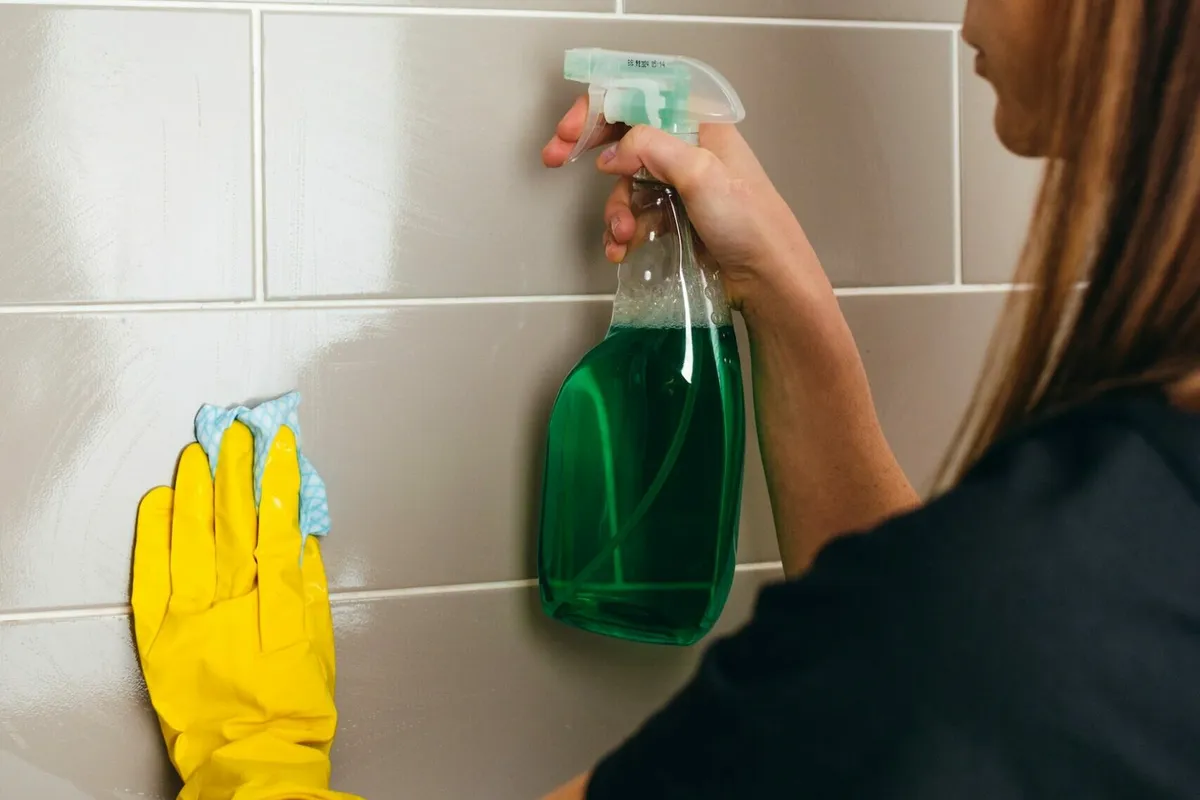
Does Lysol kill black mold? On a hard, non-porous surface, a disinfectant spray such as Lysol can kill the mold growth it directly contacts, if it is left wet on the surface for the contact time stated on the label. That is the full extent of the good news. It does not remove mold growing inside drywall, wood, grout or insulation, it does not dry out a wet wall, and it does not fix the leak or condensation that let the mold grow in the first place.
This post answers the Lysol and vinegar questions homeowners ask most, honestly and without selling a spray as a solution. Household cleaners have a real but narrow role: small surface patches on hard materials. Anything larger, anything inside a porous material, or anything that keeps coming back needs professional inspection and remediation. Our team inspects, tests, removes and remediates mold across Los Angeles — call (945) 422-7665 or request an estimate if the patch fits that description.
One safety note before anything else: never mix household cleaners. Bleach mixed with vinegar or with ammonia-based cleaners can release harmful gases. Use one product at a time, follow its label, ventilate the room, and wear gloves and eye protection.
The Short Answer: Lysol Kills Surface Mold, Not the Problem
Lysol is a disinfectant, and disinfectants are tested against specific organisms on hard surfaces under laboratory conditions. When the label lists mold or mildew and you follow its directions — spraying the surface until wet and leaving it wet for the stated contact time — it can kill the surface growth it touches. That is a surface result, and mold in a home is rarely only a surface problem.
The problem is what you cannot see. Mold grows into porous materials such as drywall, wood and grout, and it grows behind surfaces where a spray never reaches. A disinfectant cannot penetrate drywall to reach growth inside the wall cavity, and it cannot dry a wall that is still wet from a leak. So a patch can look clean for a few days after spraying and then return in the same place, because the growth inside the material and the moisture feeding it were never touched.
That is also why the question of whether Lysol kills black mold has two answers. On a tile or glass surface, yes, with the right contact time. As a way to deal with black mold in a home, no — killing what is visible is not the same as removing the mold and fixing the moisture. Our post on what kills black mold permanently explains the two-part answer: remove the growth and fix the water that fed it.
Does Lysol Kill Mold on Wood?
It depends on the wood and how deep the growth goes. On a sealed, hard wood surface — a varnished floorboard or a painted trim piece — a disinfectant can kill surface growth that it contacts, in the same way it works on tile. The surface is non-porous enough that the product stays where the mold is.
On unfinished, raw or water-damaged wood, the answer changes. Mold grows into the fibres of bare wood, and a spray sits on the surface while the growth continues underneath. Scrubbing may remove the visible staining, but the growth inside the wood remains, and it returns as long as the wood stays damp. Wood that is saturated, soft, warped or has deep growth usually has to be removed or professionally treated, not sprayed.
If you are unsure which case you have, look at the wood after it has dried fully. Surface staining that wipes away from sealed wood is a different job from dark growth that has soaked into bare timber around a leak. When in doubt, stop and arrange an inspection — disturbing a large patch can spread spores through the room, and our mold inspection page explains what an inspection covers.
Do Lysol Wipes Kill Mold?
Lysol wipes carry the same disinfectant chemistry as the spray, so they can kill surface mold they contact on a hard surface — with the same limits. A wipe works only where it touches, and only if the surface stays wet for the contact time on the label. A quick wipe that dries in seconds has not done the job the label describes.
In practice, wipes are the weakest option for mold. They cover a small area, they dry quickly, they cannot reach into grout lines or porous material, and they are not a tool for anything larger than a tiny surface spot. They are convenient for wiping a shower tile or a window frame, and they are not a mold removal method. If the spot you are wiping keeps coming back, the growth is not on the surface — it is in the material or behind it, and no wipe will reach it.
Wipes also have a practical risk: wiping a large patch spreads spores into the air and onto the cloth, the wipe and your hands. For anything beyond a small spot on a hard surface, leave the area alone, do not run a fan across it, and call us for an inspection.
How Long Does It Take for Vinegar to Kill Mold?
Undiluted white vinegar is often suggested for mold because its acidity can kill some surface mold on hard materials. The usual guidance is to spray it on, leave it for at least an hour, then scrub and rinse — but there is no single verified contact time that applies to every surface and every mold, and vinegar does not carry a disinfectant label claim for mold in the way a registered disinfectant does. Treat any time figure you read online as a rule of thumb, not a measured result.
What matters more than the clock is the same limit that applies to every household cleaner: vinegar works only on the surface it contacts. It does not reach growth inside drywall, grout or wood, it does not dry a wet wall, and it does not fix the moisture source. A patch cleaned with vinegar can look better and then return, for the same reason a patch sprayed with Lysol returns.
Vinegar has one more limit worth knowing. It should not be used on stone surfaces such as marble or travertine, which acid can damage, and it must never be mixed with bleach — the combination can release harmful chlorine gas. Use one cleaner at a time, ventilate the room, and wear gloves. And if the mold covers more than a small surface patch, or the area is larger than about 10 square feet, the U.S. Environmental Protection Agency (EPA) guidance is to hire a professional rather than clean it yourself.
What Household Cleaners Cannot Do — and When to Call a Professional
Household cleaners cannot do the three things that actually solve a mold problem. They cannot remove mold growing inside porous materials, because the product never reaches it. They cannot dry a structure that is still wet, because drying needs airflow, dehumidification and time. And they cannot fix the moisture source — the leak, the failed seal, the condensation or the drainage fault — because that is a repair, not a cleaning job.
Call a professional when the patch is larger than about 10 square feet, when it is on drywall, wood or insulation rather than a hard surface, when it is inside a wall, ceiling, floor or HVAC system, when it keeps returning after cleaning, or when there has been a leak or flood. Those are the signs the problem is inside the material or the structure, and that is the point at which cleaning stops helping.
Our process is the opposite of a spray: inspection and moisture readings first, then containment so spores do not spread, removal of the affected material, cleaning of what can be saved, drying to measured readings, and a check that the moisture source is fixed. If you are at that point, call (945) 422-7665 or request an estimate, and tell us where the mold is and whether there has been a leak. Our black mold removal page explains the process for dark growth specifically, and our mold removal page explains the full sequence.
Published:
Related pages — Does Lysol Kill Black Mold
Frequently asked questions — Does Lysol Kill Black Mold
Does Lysol kill black mold?
On a hard, non-porous surface, Lysol can kill the black mold growth it directly contacts if it is left wet for the contact time on the label. It does not remove mold growing inside drywall, wood or grout, and it does not fix the moisture that caused the growth, so it is not a mold remediation solution.
Does Lysol kill mold on wood?
On sealed, hard wood it can kill surface growth it contacts. On unfinished or water-damaged wood, mold grows into the fibres where a spray cannot reach, so the growth returns. Saturated or deeply affected wood usually needs removal or professional treatment.
Will Lysol kill black mold?
It can kill the surface growth it touches on a hard surface, with the right contact time. It will not deal with black mold inside a porous material or behind a surface, and a patch that returns after spraying is a sign the growth or the moisture source is still there.
What does Lysol do to black mold?
As a disinfectant, Lysol can kill surface mold it contacts on hard surfaces and can lighten the visible staining. What it cannot do is reach growth inside drywall, wood or grout, dry a wet wall, or stop the mold from returning while the moisture source remains.
Does Lysol kill mold?
Lysol can kill mold on the hard surfaces it contacts, when used as the label directs. It is not a general mold remover: it does not work inside porous materials, it does not remove affected drywall or insulation, and it does not address the damp that caused the growth.
Do Lysol wipes kill mold?
Wipes can kill surface mold they contact on a hard surface, if the surface stays wet for the label's contact time. In practice they cover a small area and dry quickly, so they are only useful for a tiny surface spot — not for grout, drywall, wood or anything that keeps returning.
How long does it take for vinegar to kill mold?
The common guidance is to leave undiluted white vinegar on the surface for at least an hour before scrubbing, but there is no single verified contact time for every surface and mold type. Vinegar works only on the surface it contacts and does not reach growth inside porous material.
Does vinegar kill black mold permanently?
No. Vinegar can kill some surface mold on hard materials, but it does not remove growth inside drywall or wood and does not fix the moisture source. Permanently dealing with black mold means removing the growth and fixing the water that fed it.
Can I mix bleach and vinegar to clean mold?
No, never mix bleach with vinegar or with ammonia-based cleaners. The combination can release harmful gases. Use one product at a time, follow its label, ventilate the room, and wear gloves and eye protection.
When should I stop cleaning and call a professional?
When the patch is larger than about 10 square feet, when it is on drywall, wood or insulation, when it is hidden inside a wall or ceiling, when it keeps returning after cleaning, or when there has been a leak or flood. Call (945) 422-7665 or request an estimate and describe what you are seeing.
Need mold help — Does Lysol Kill Black Mold?
Tell us where the mold is and how large the area looks. We will arrange an inspection and explain the work before it begins.